Creative Practice 01: Painting a Hillside
Creating something of your own is as important as exercising or eating well, and it is often much easier to follow a plan or a recipe to begin with instead of stepping into the unknown all alone. If you desire a bit of guidance to step forth, I offer you a creative practice to try.
Sometimes the decision making of wanting to do something creative inadvertently halts the creative process in its tracks. Staring at a blank page can seem like a mountain to climb, and you get tired just looking at it. But creating something of your own is as important as exercising or eating well, and it is often much easier to follow a plan or a recipe to begin with instead of stepping into the unknown all alone. If you have the will to do it, by all means; but if you desire a bit of guidance to step forth, I offer you a creative practice to try.
Supplies Needed
- Paper (watercolor paper works best for paints, but anything you have will do)
- Washi tape for a crisp edge
- Gouache paints, or a medium of your choice
- Paint brushes and a palette
- Water and a paper towel to clean your brush between colors
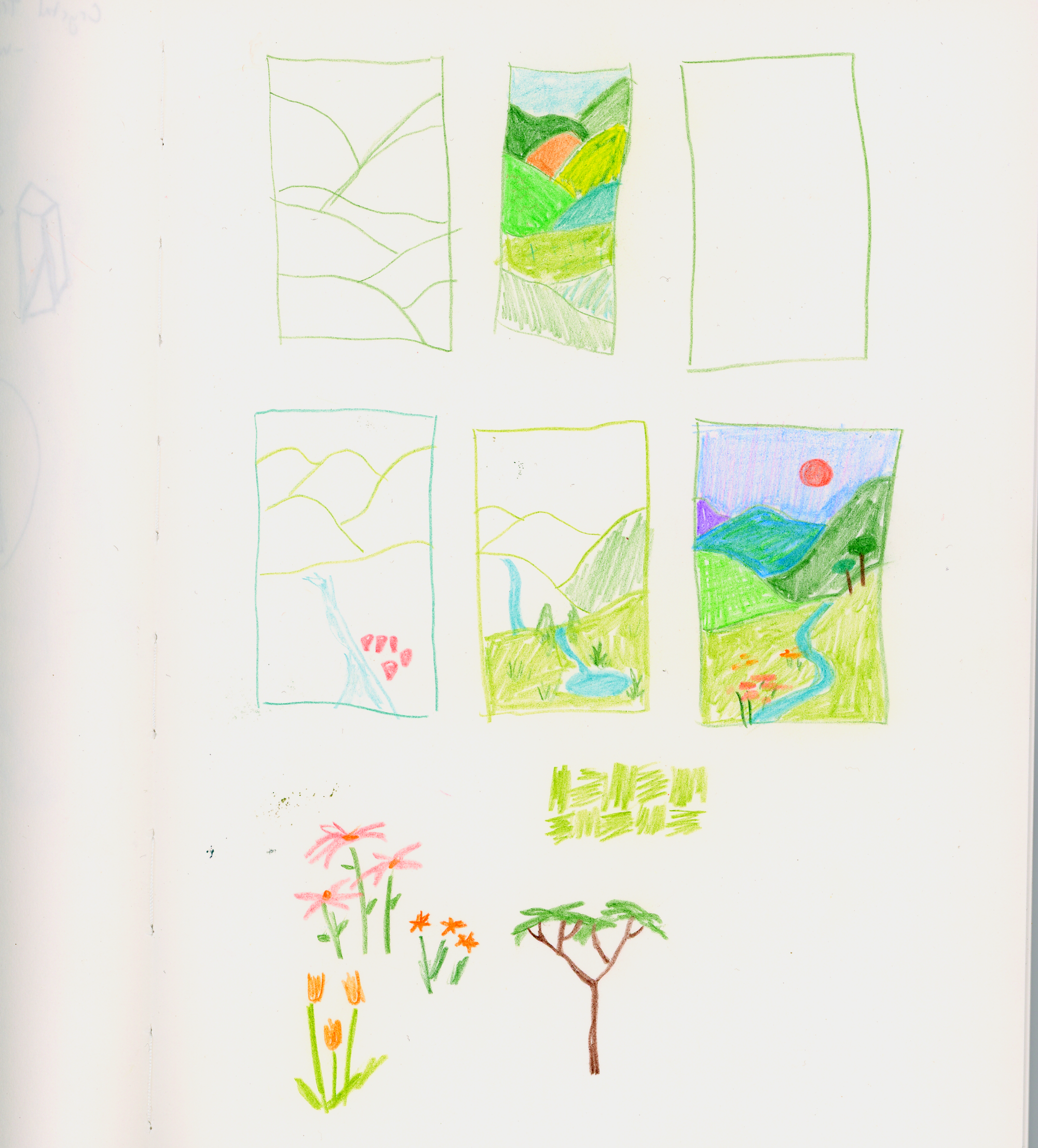
The first step can be made easier by starting with scribbles and simple lines. Use a scrap sheet of paper or a sketchbook to start working on a composition and practice the type of foliage and flowers you want on your hillside. Play with colors and combine them until you get a palette that you like. Once you have a rough composition, you can use the following steps and techniques to create your own unique vision.
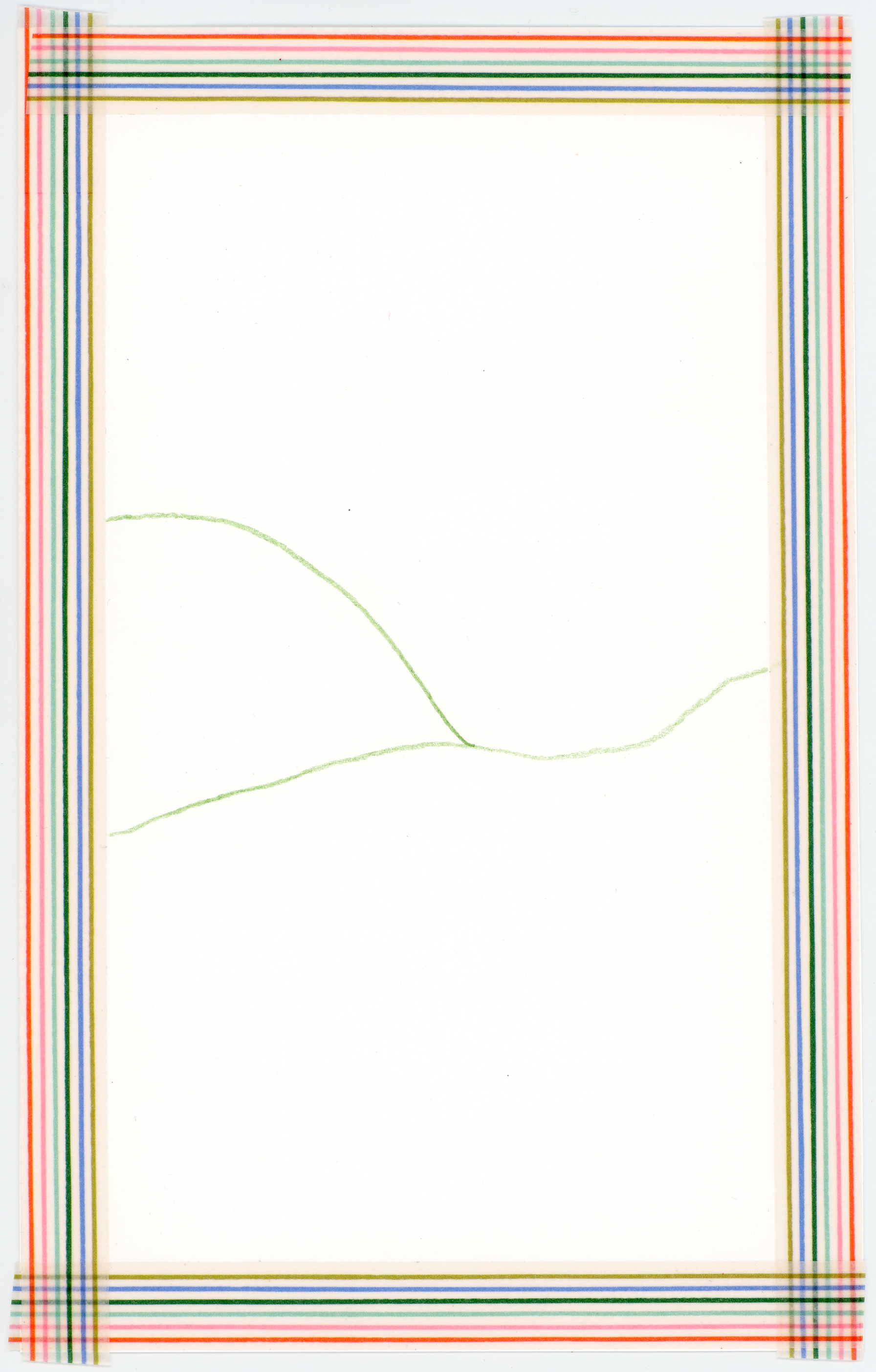
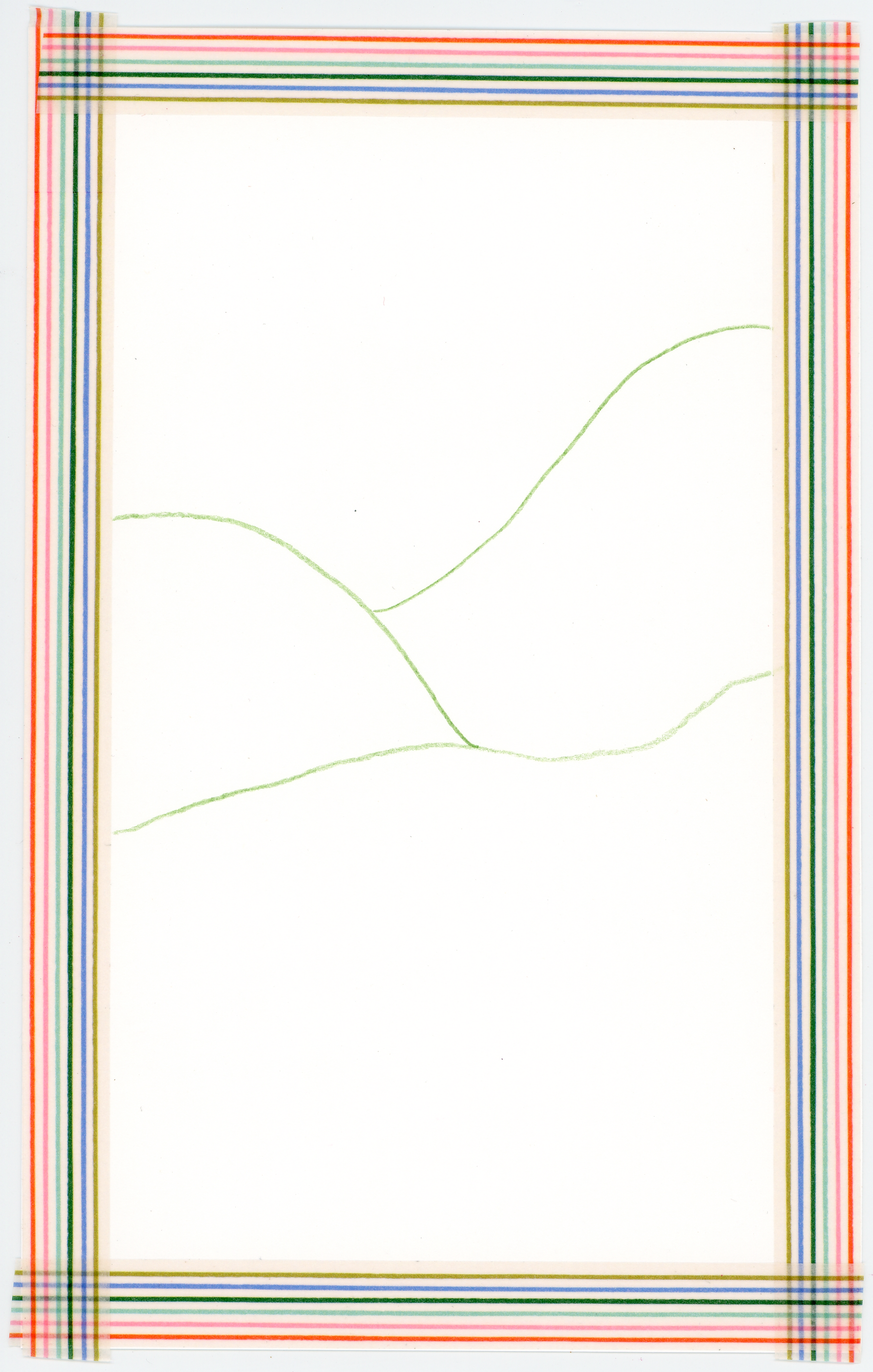
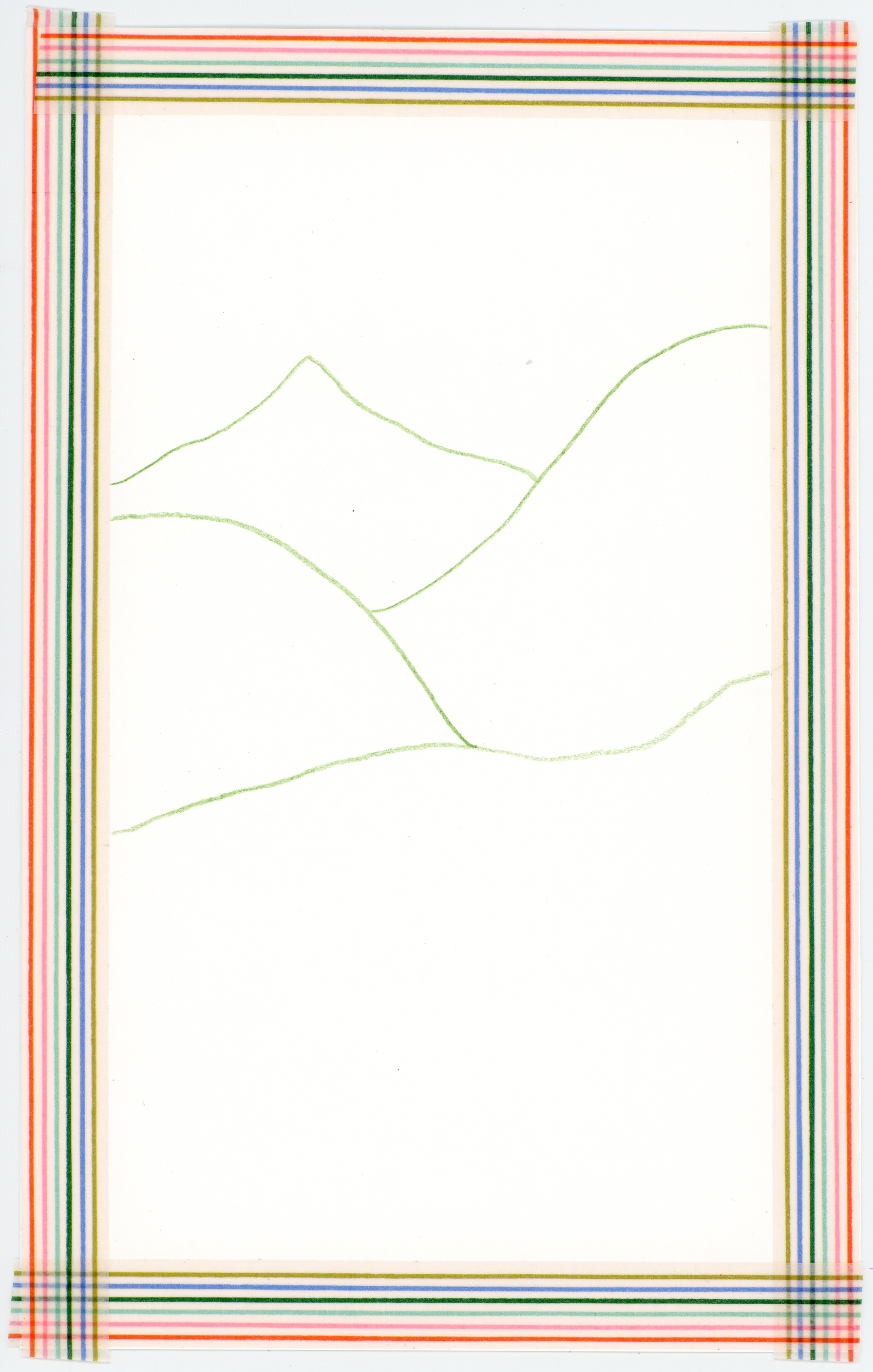
- Draw a line across your page, just below the middle, with a bit of wave to it. This is the start of your landscape. Add a curved line coming down to meet in the middle, to create your first hill. Then add a third, and a forth.
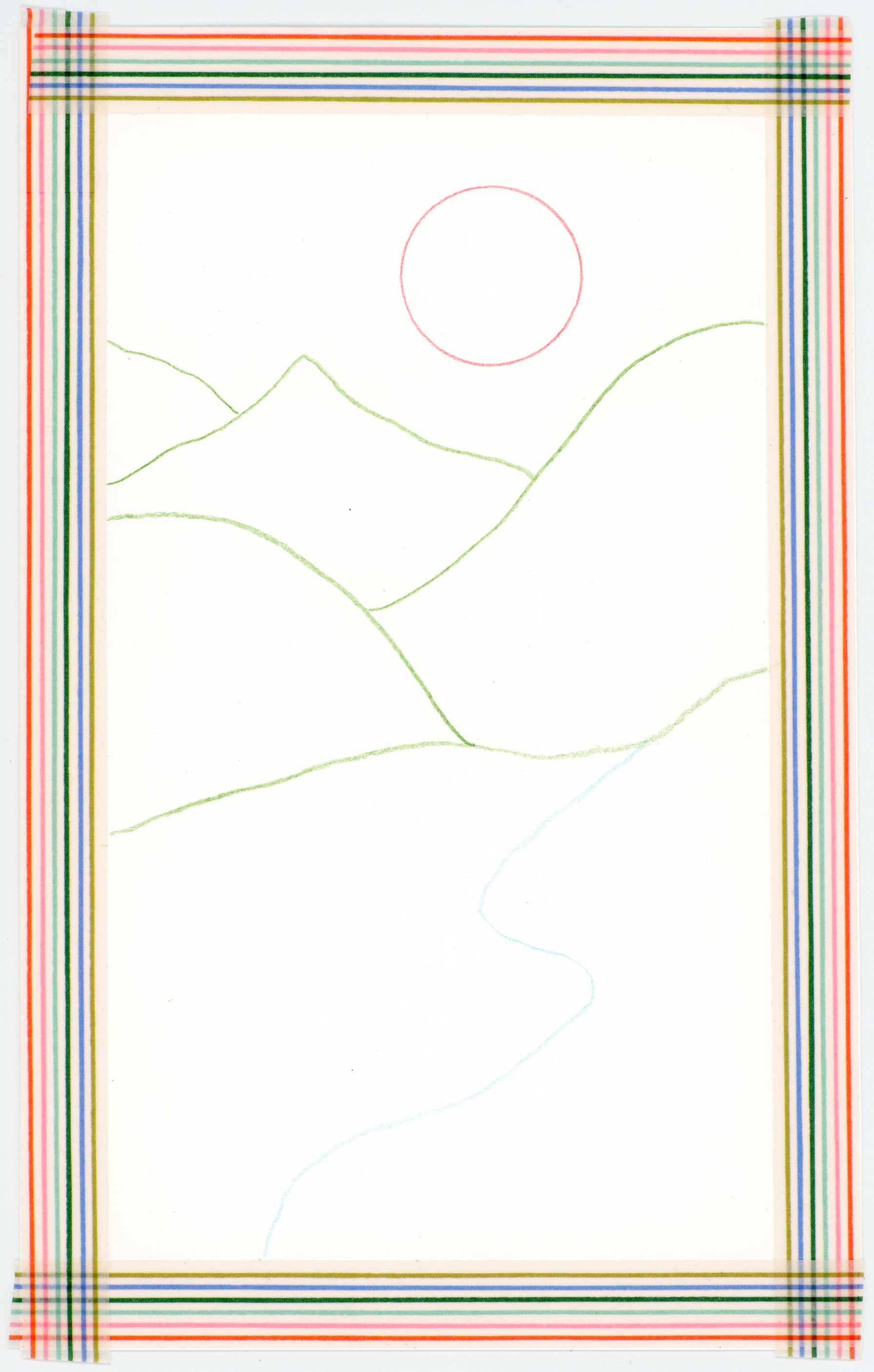
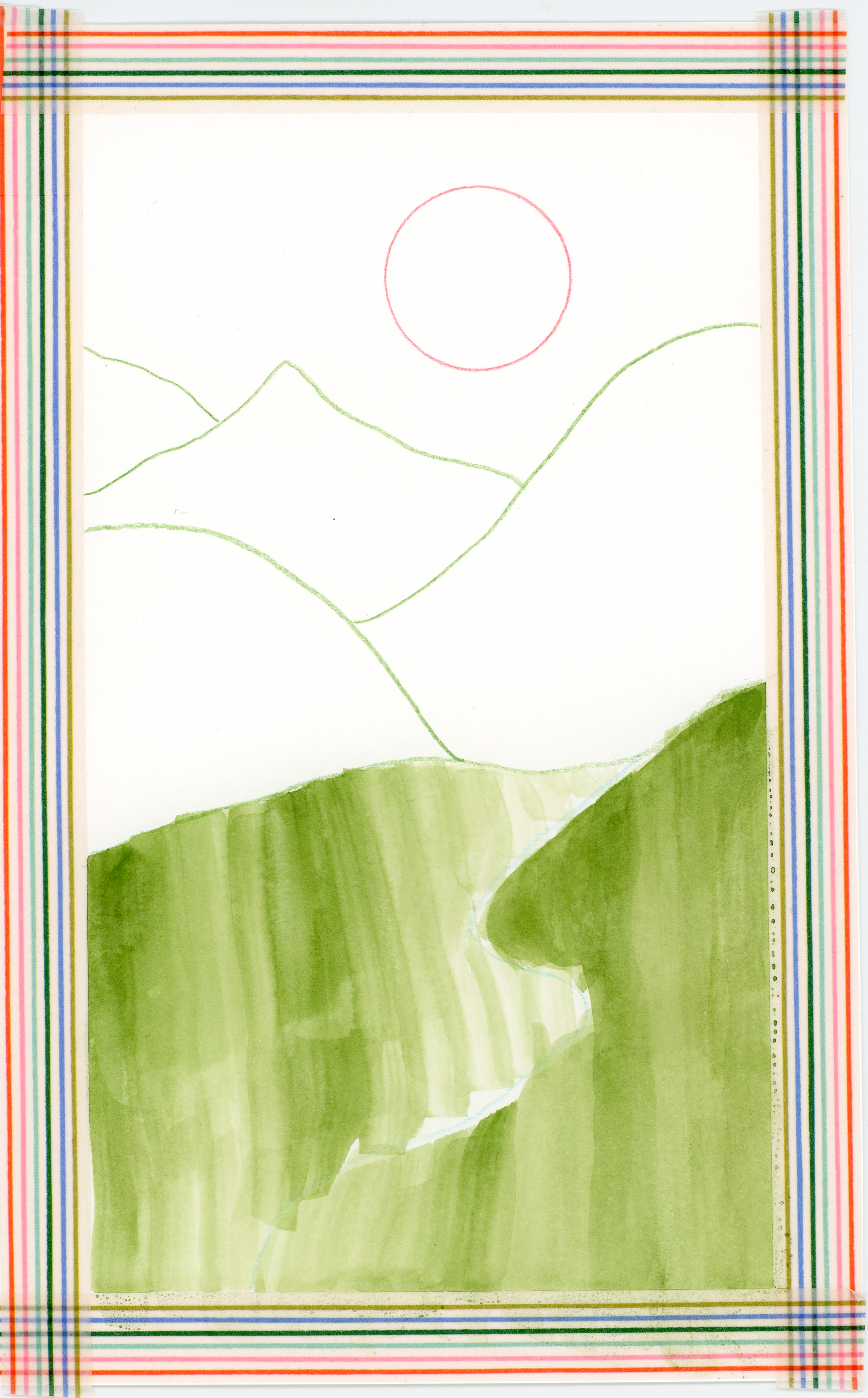
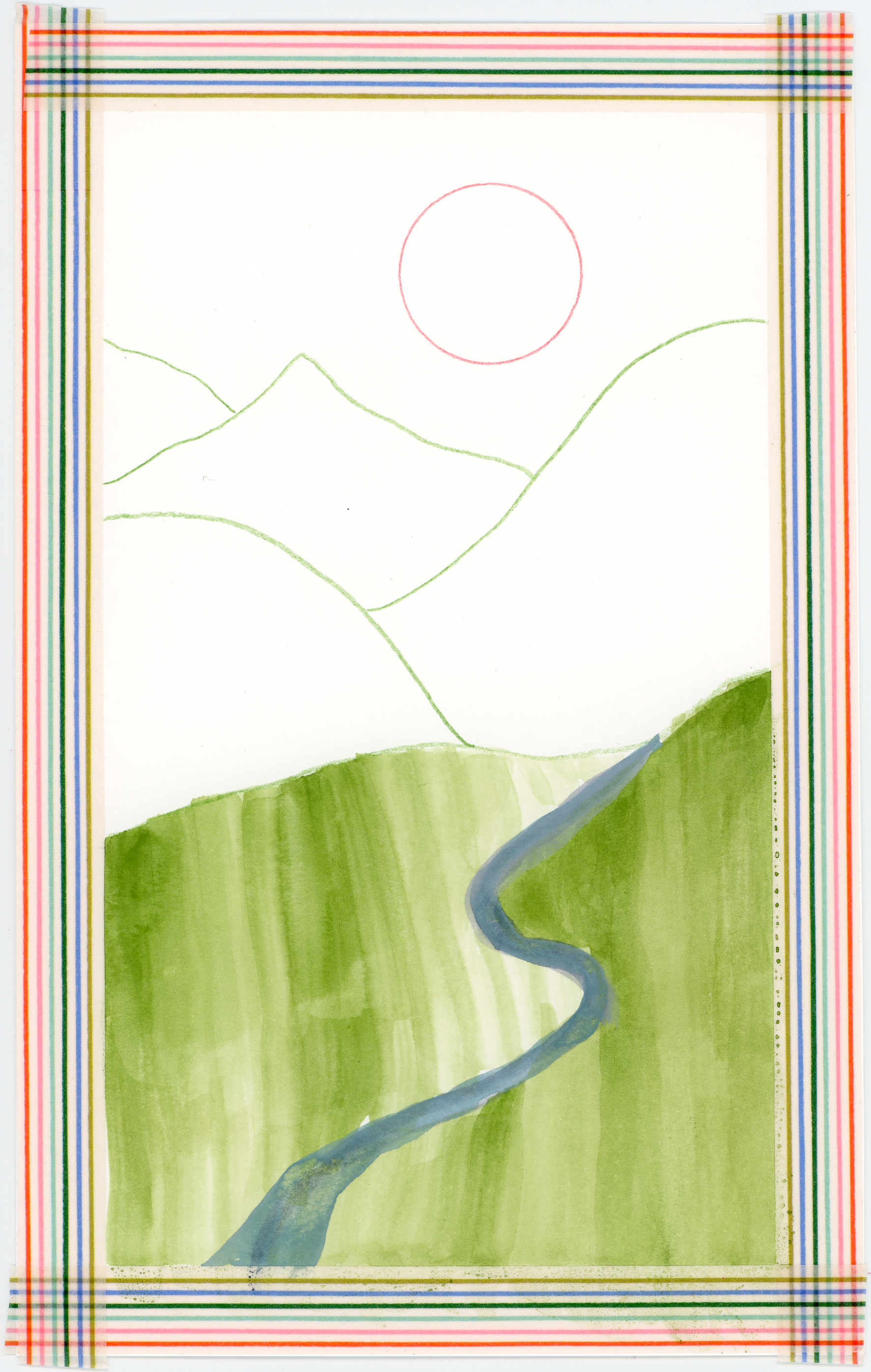
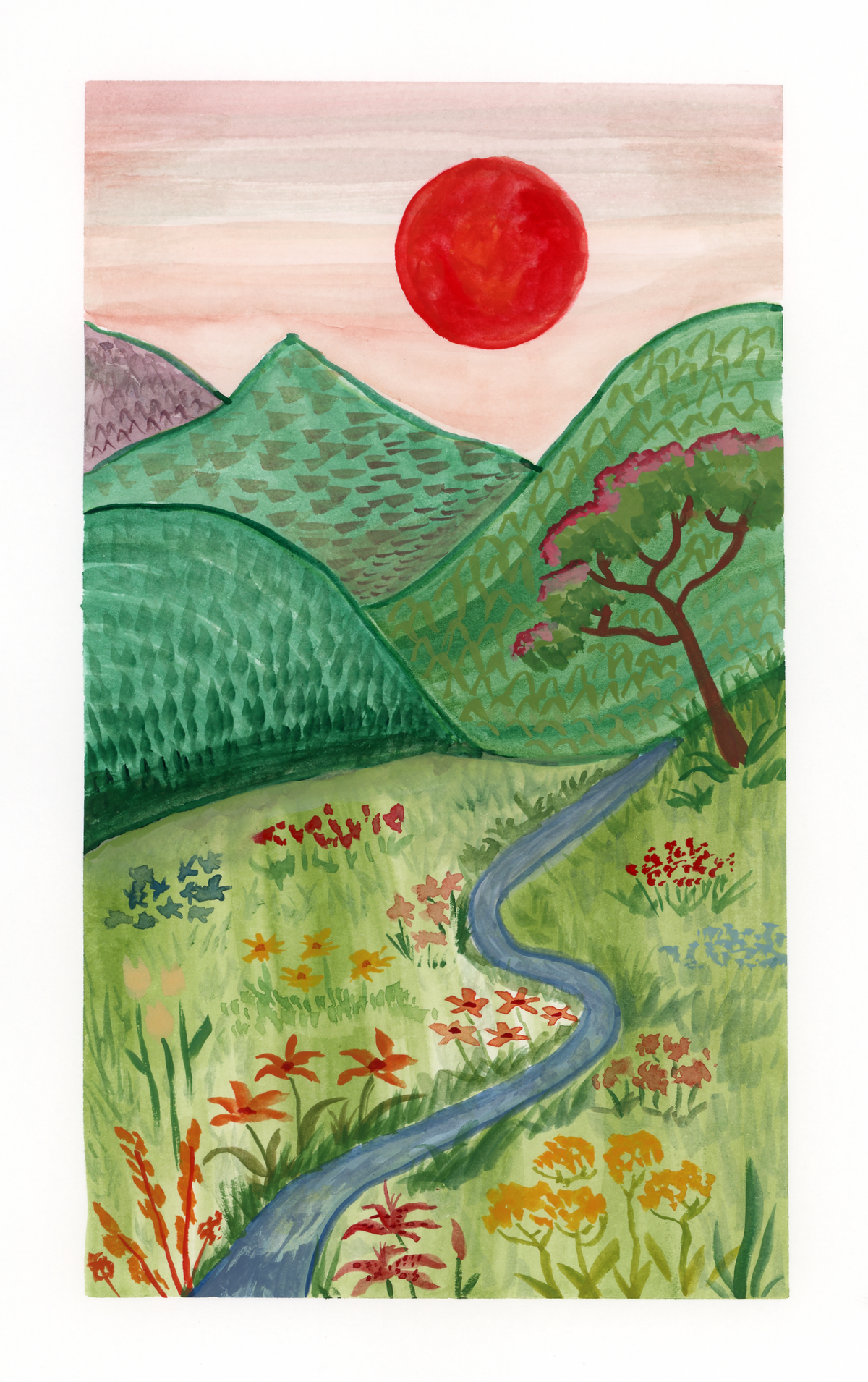
- Add an final mountain if you like. Draw a squiggly line from your hillside to the bottom of your page to create a river. Then use your washi tape or another round object to add a sun in the sky. With your lightest shade of green, paint your hillside. Then with a river-like blue, paint a winding stream.
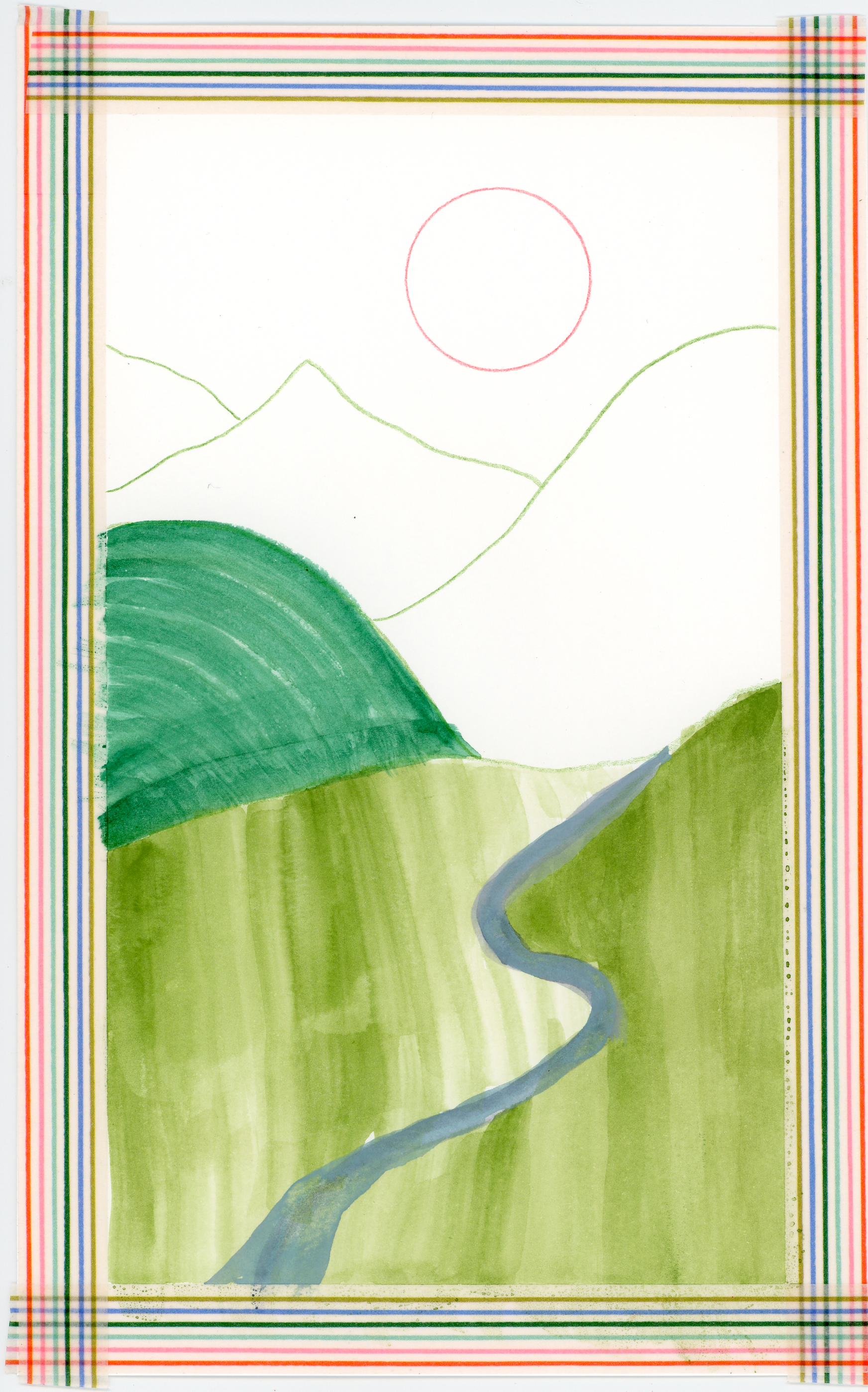
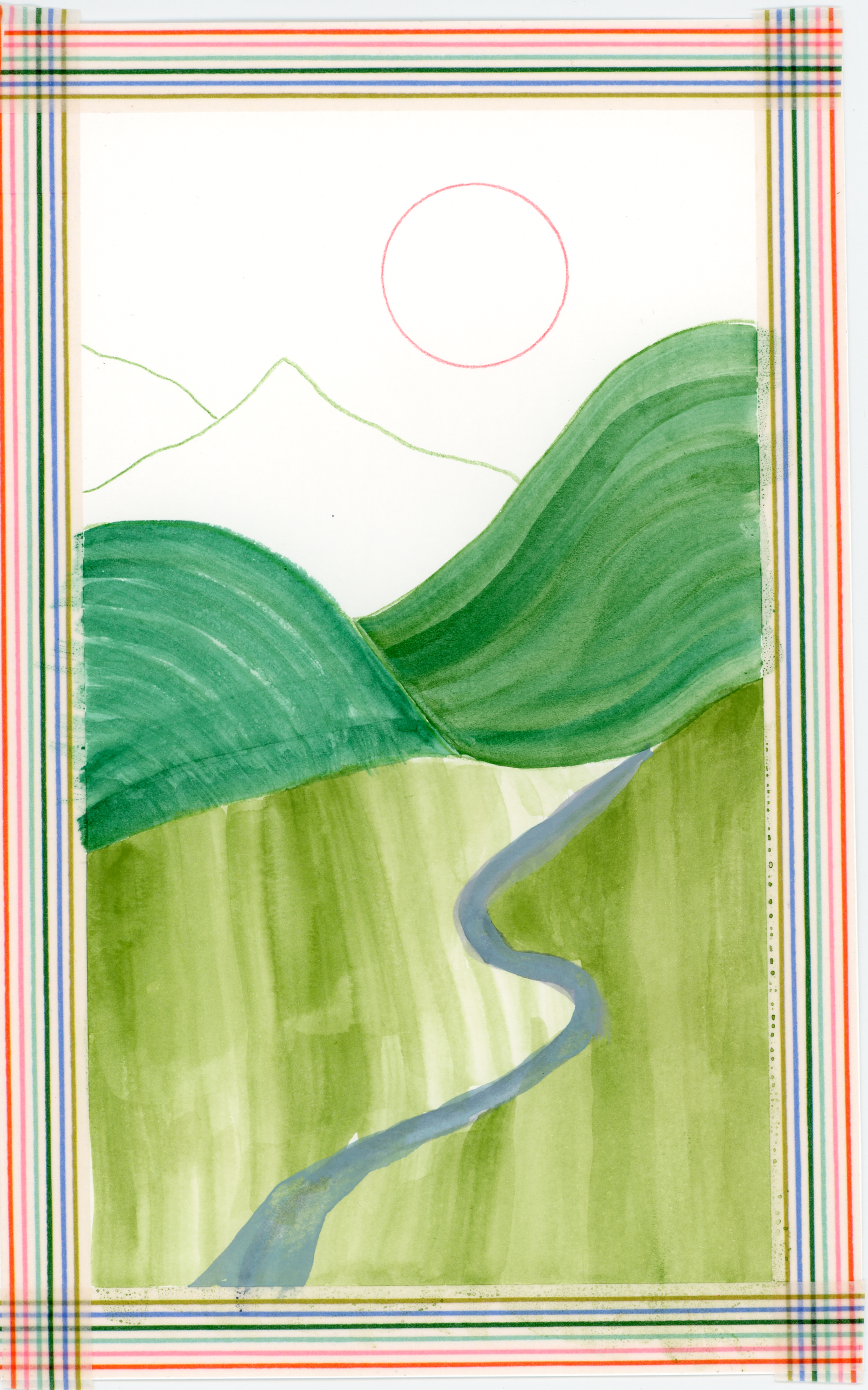
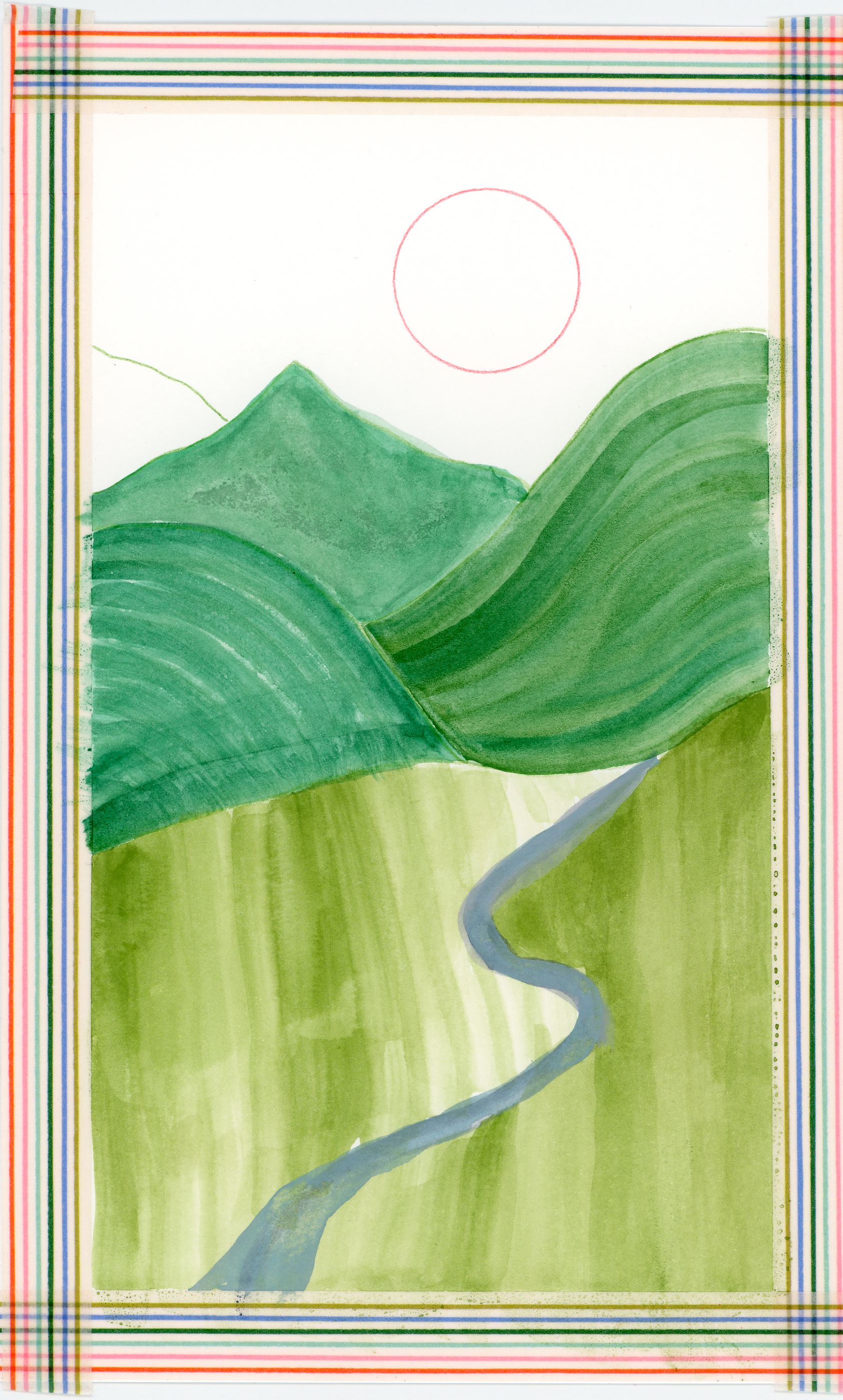
- Pick a darker green now and fill in the first hill. With a different shade of green, fill in the next hill, then the mountain. You can adjust the shade by adding a little blue to one green, and a little red to a different green.
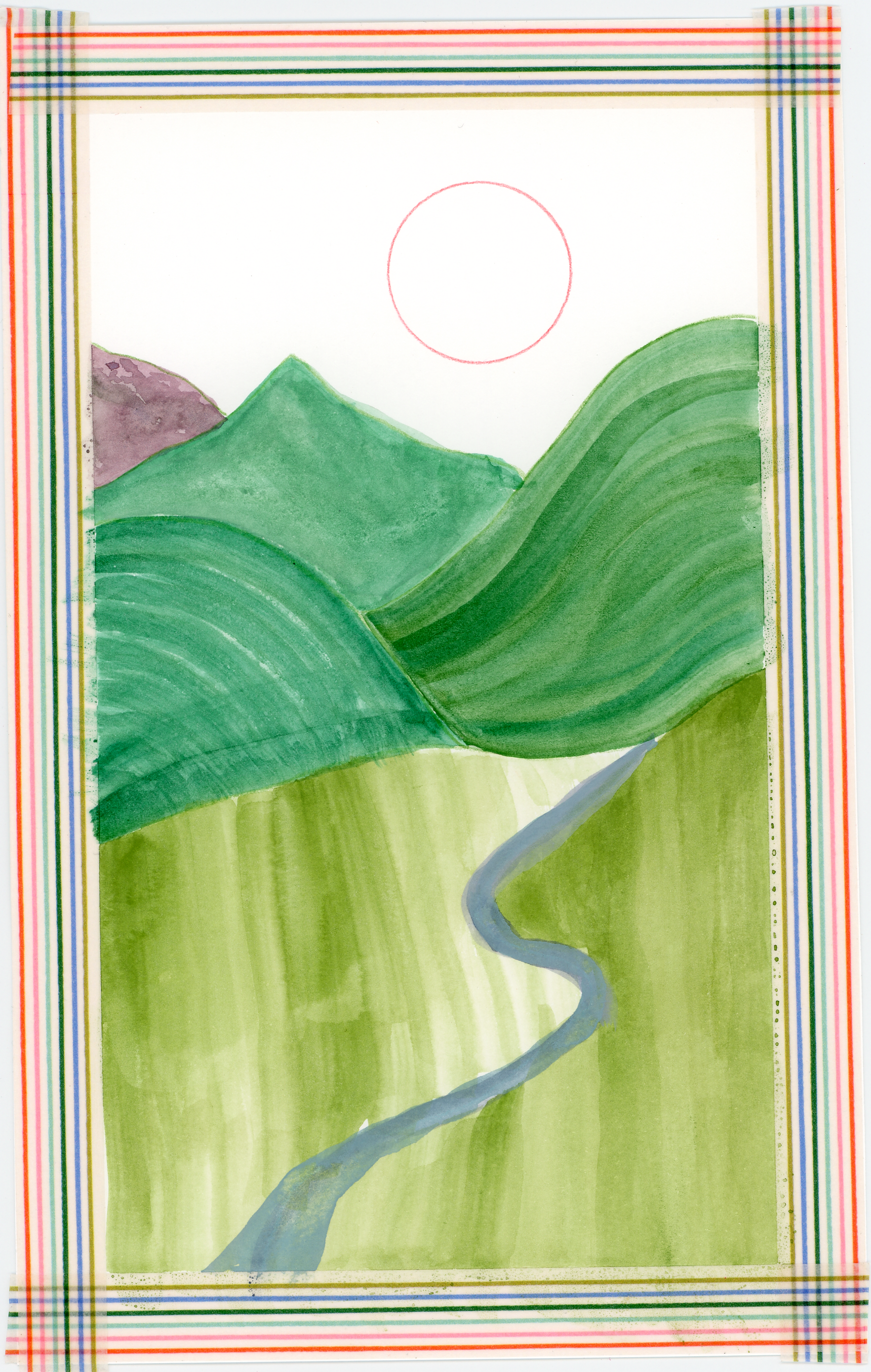
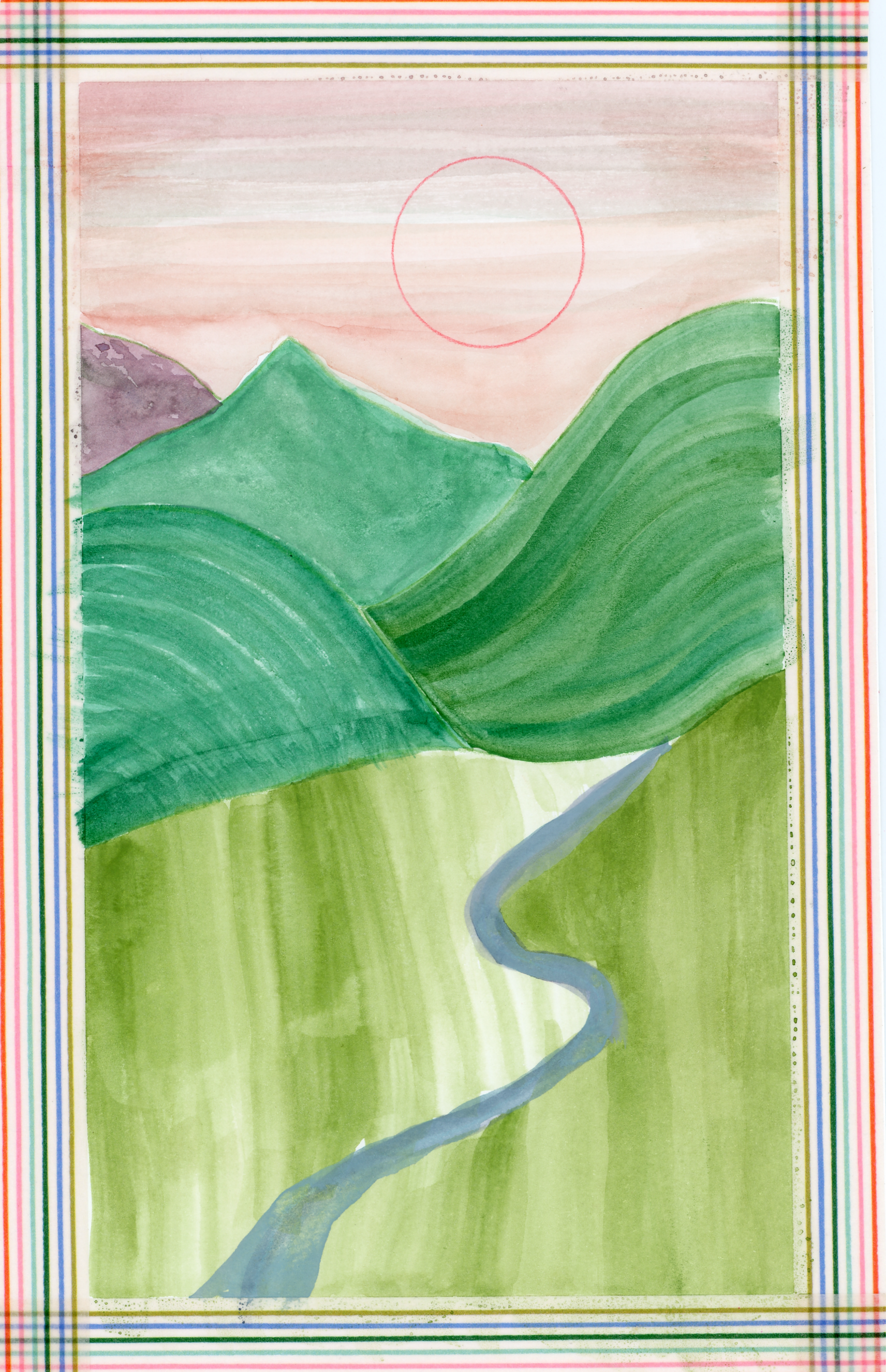
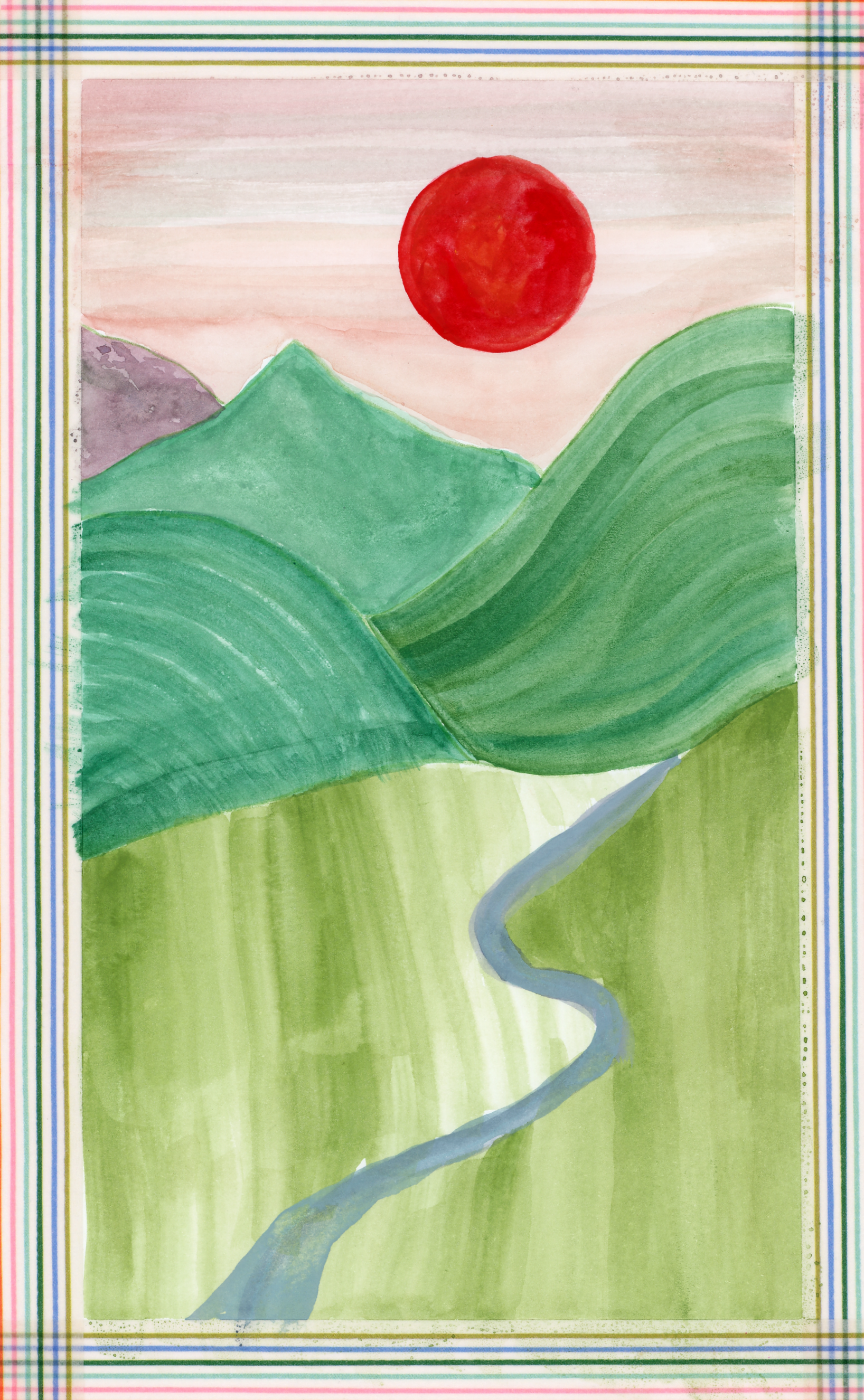
- To transition to the sky, your final mountain can be painted a plum color, like a mountain in shadow. For the sky, paint horizontal strokes in a light pink. Then choose a color for the sun, something significant like red.
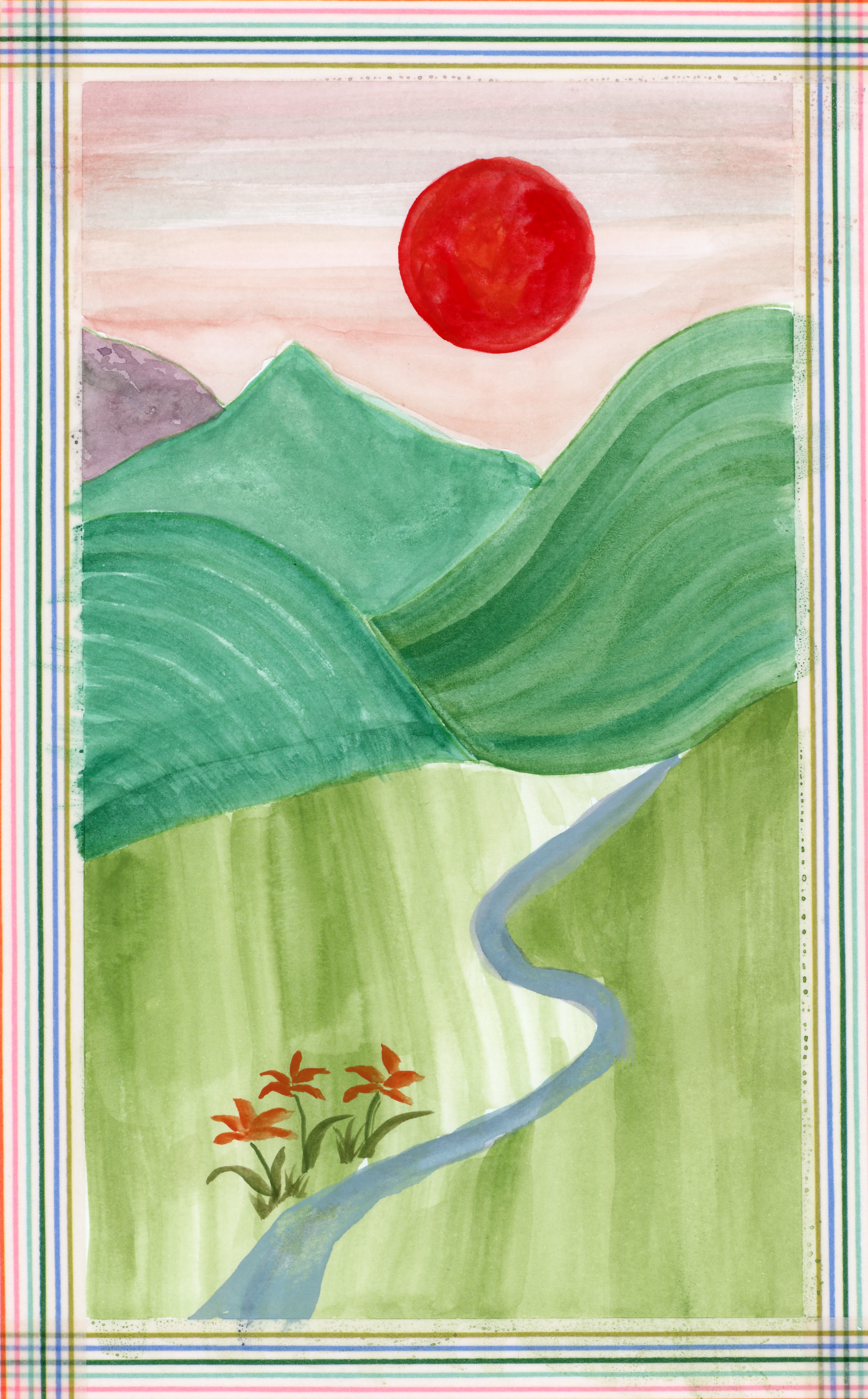
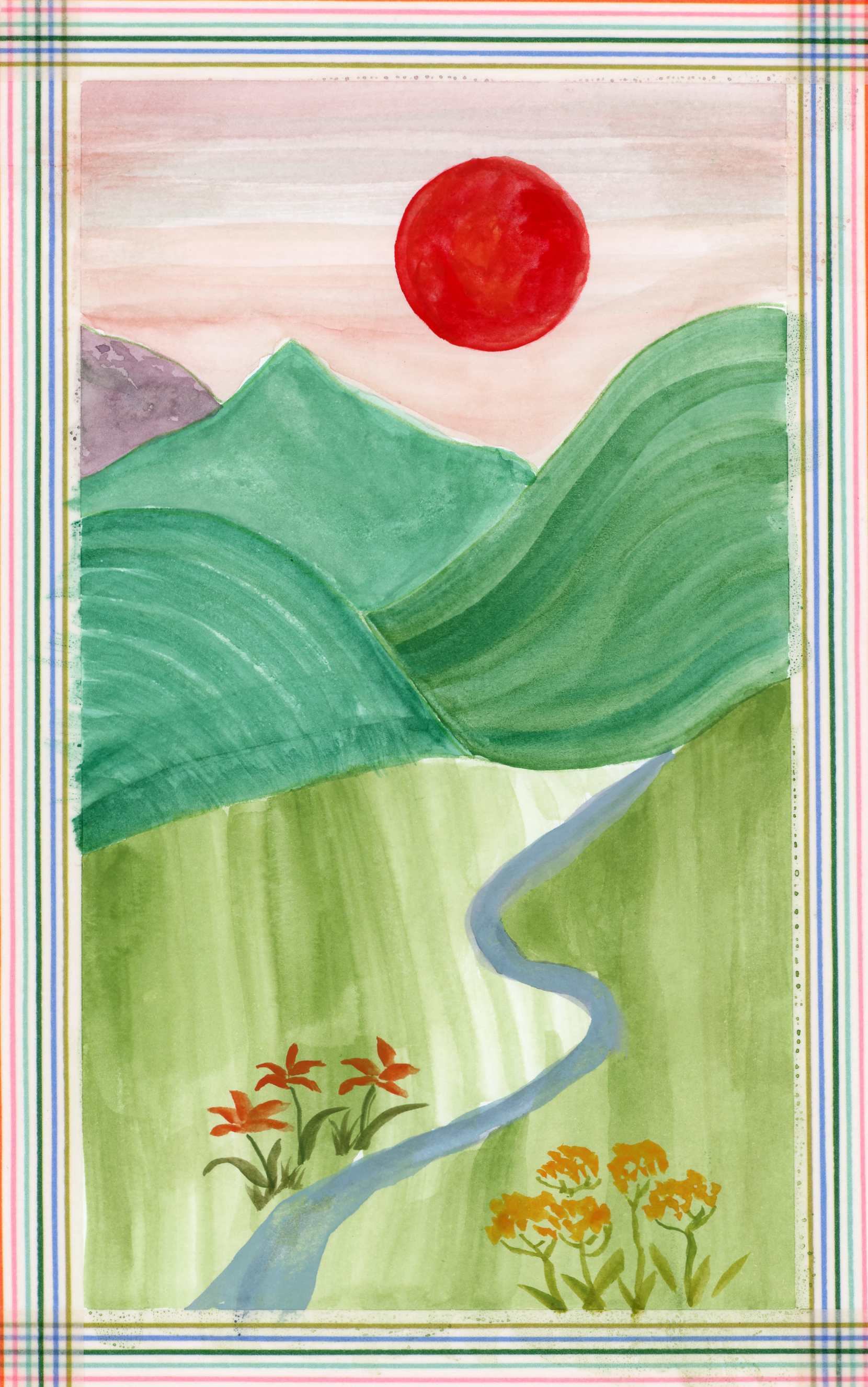
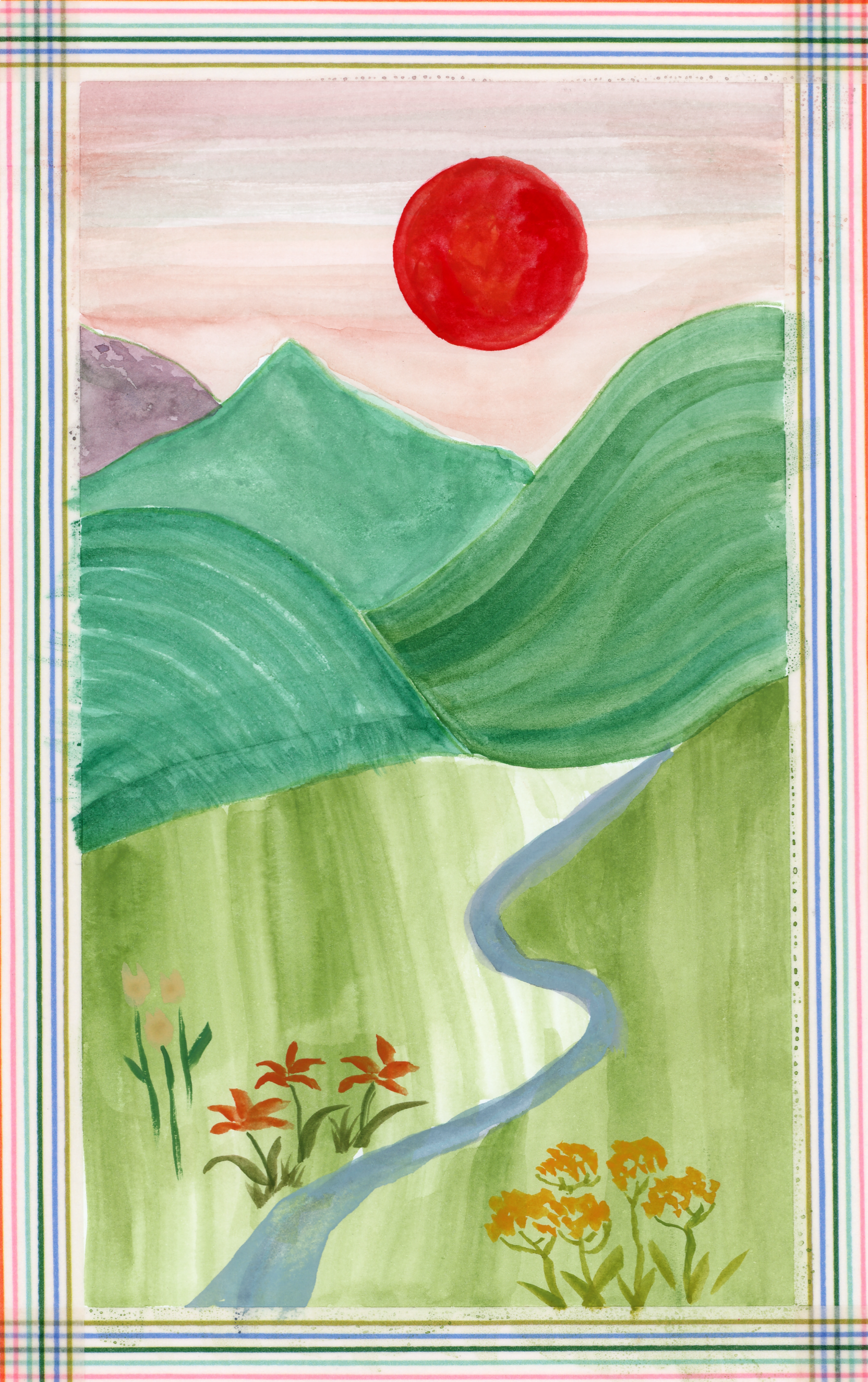
- Once you have the landscape filled in, you can start on your flower meadow. Create four to five tear drop shaped strokes stemming from a center point to create a flower. Paint green stems and grass shooting up from the bottom. For painting yarrow, poke your brush to the page to create yellow clusters of dots in a half moon shape. Then draw green stems coming from the flowers, like a wiry pedestal.
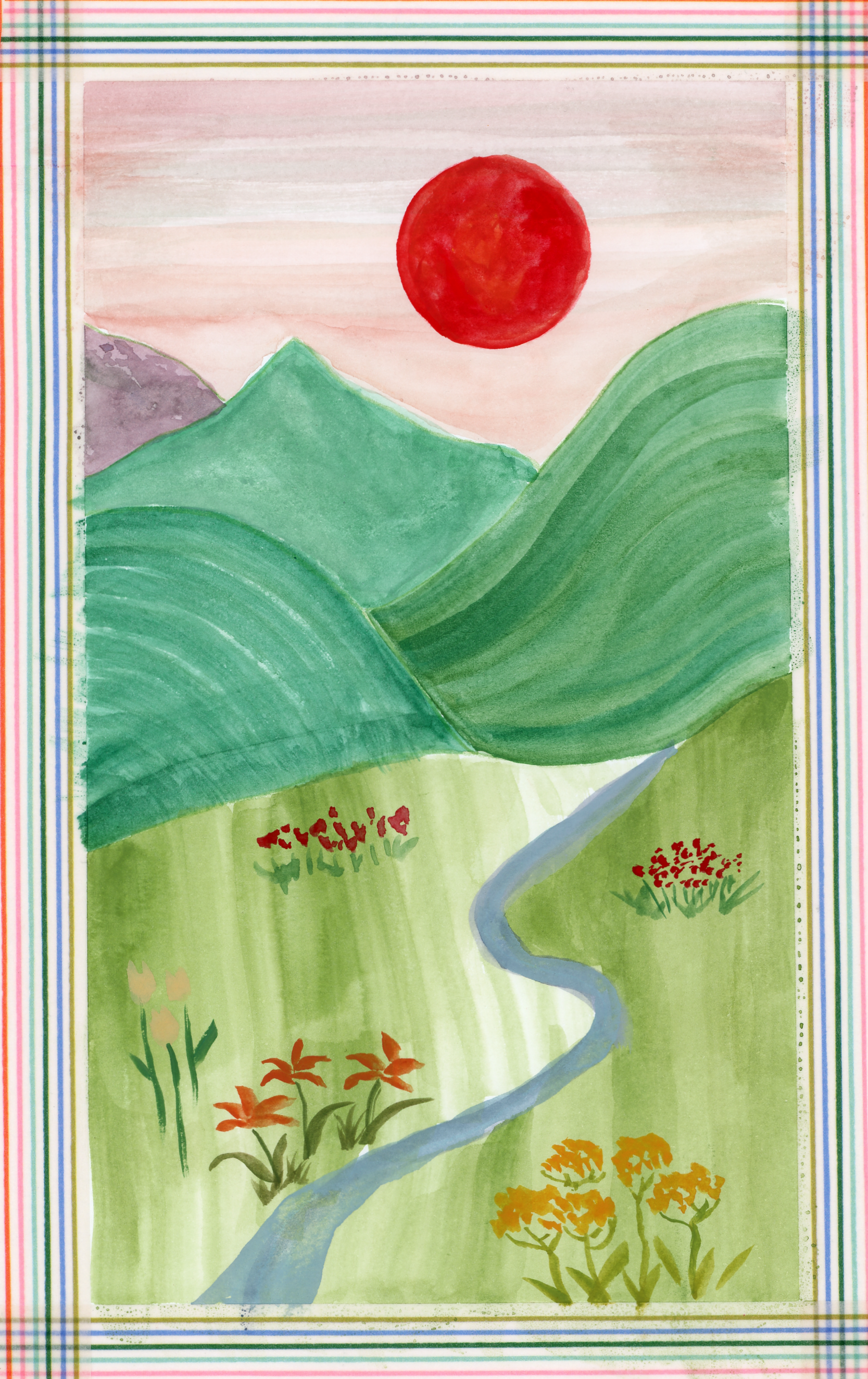
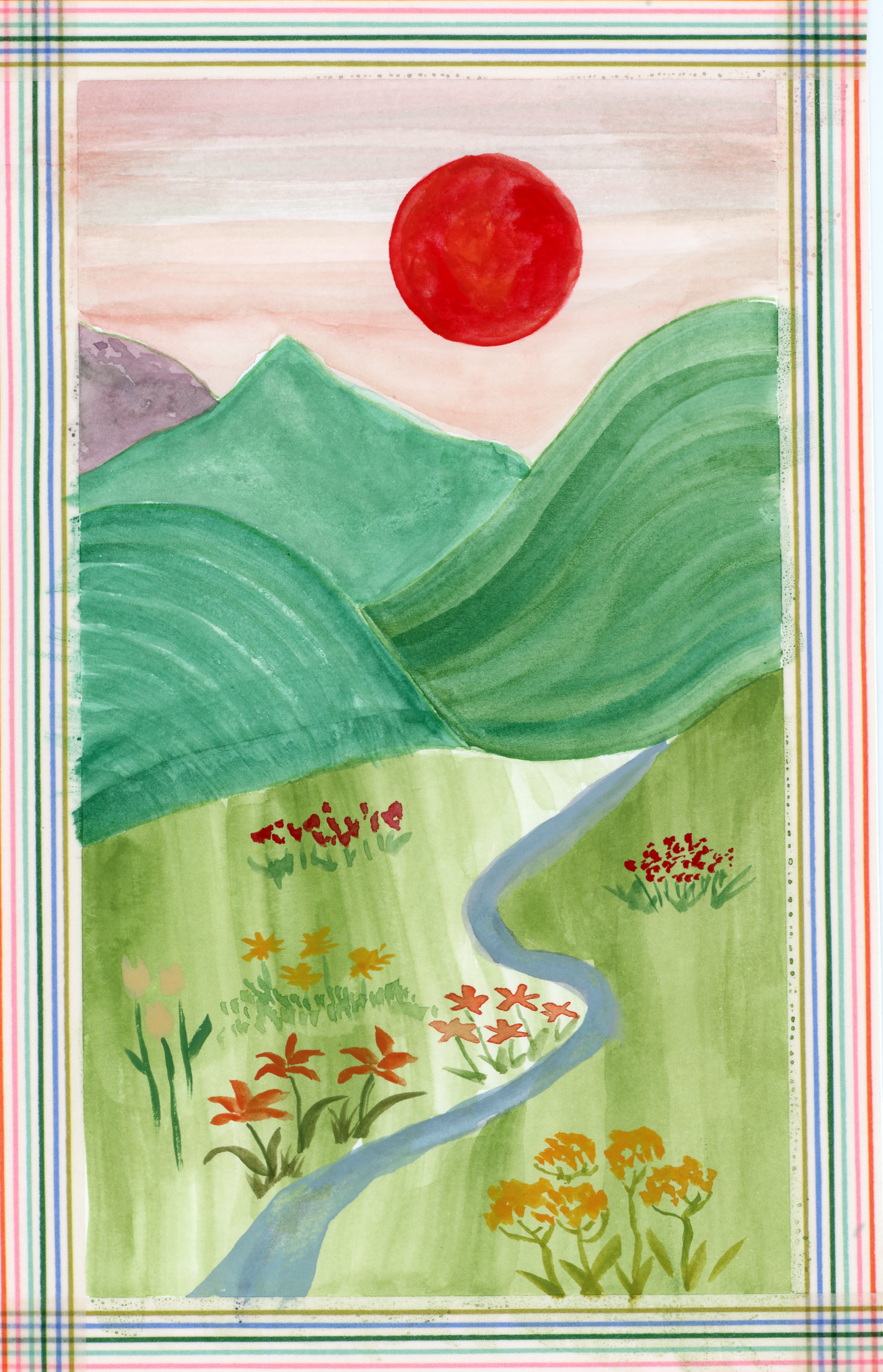
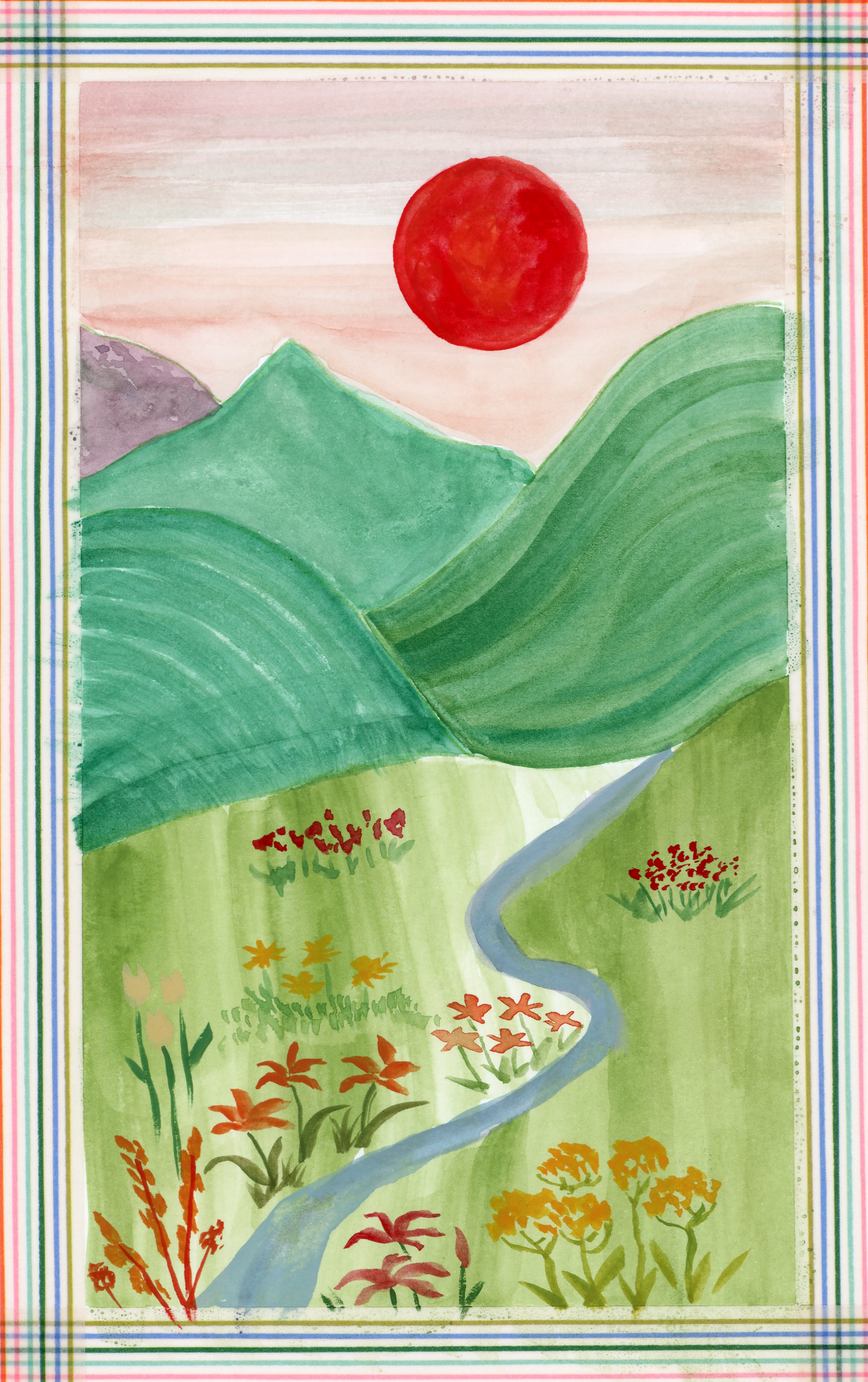
- For flowers further in the distance, you can simply poke your brush to the page in some darker colors, then attach them to some vertical green lines and leaves to represent stems. Start to utilize these techniques to fill in the meadow as you like.
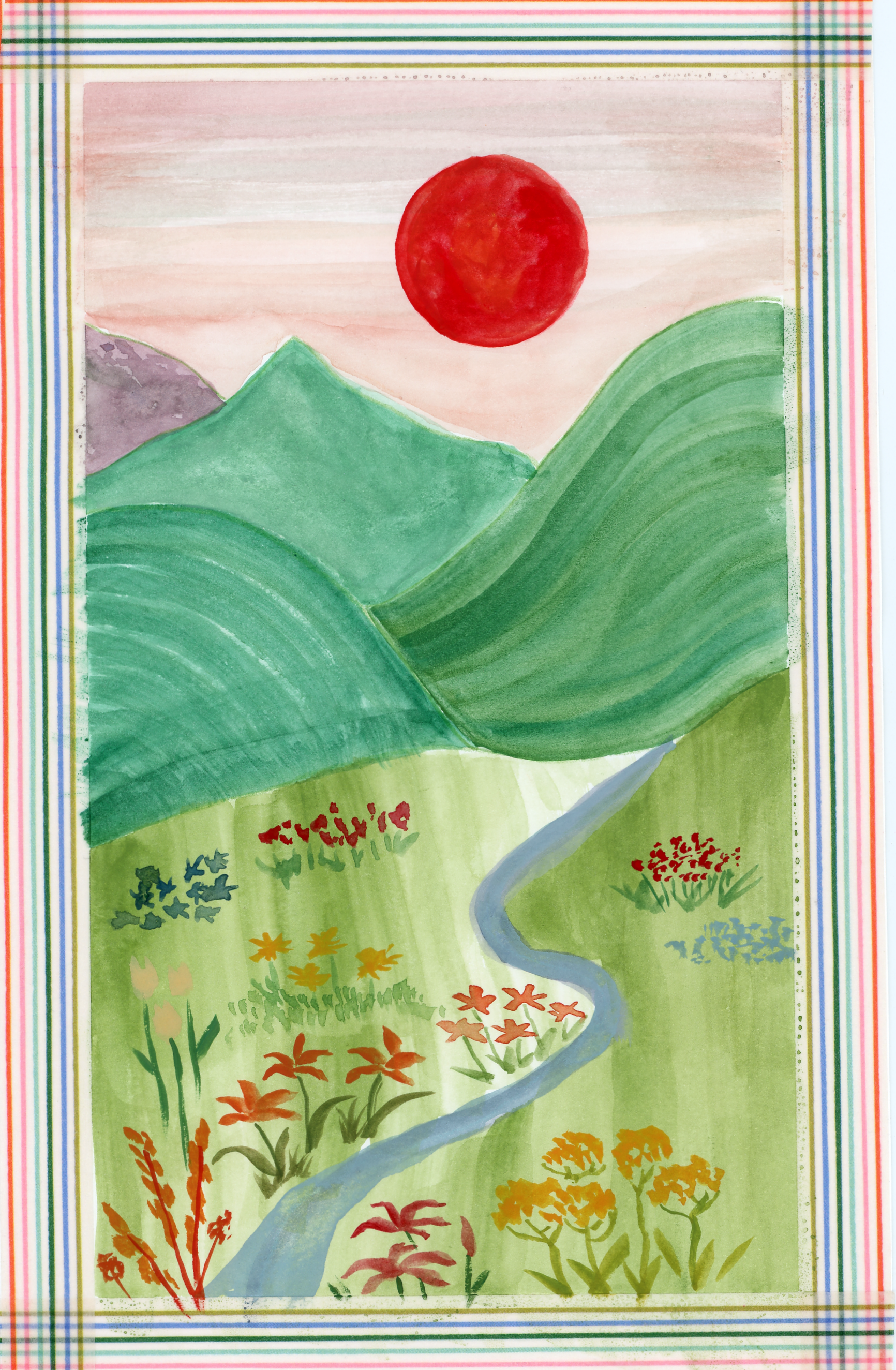
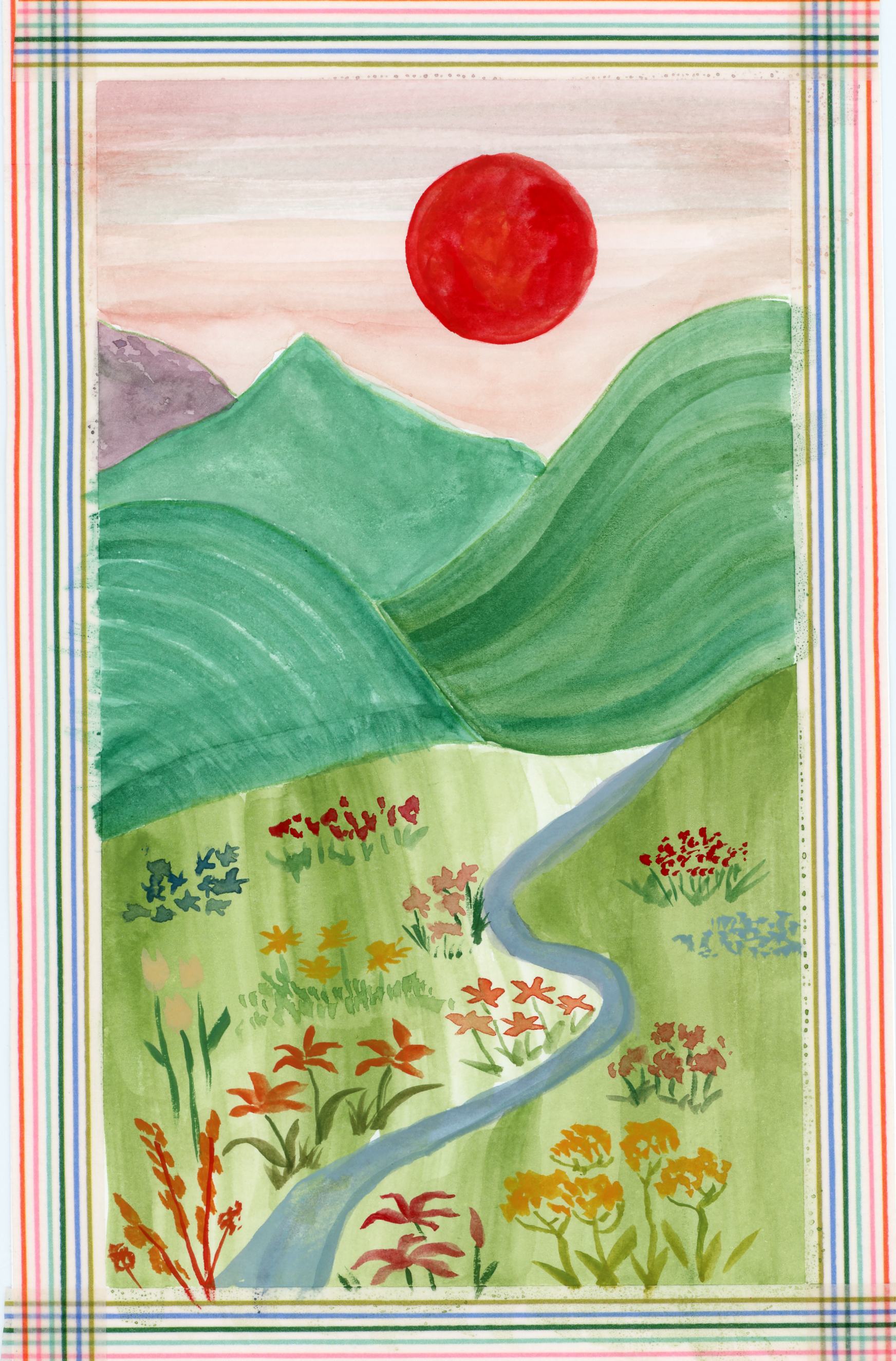
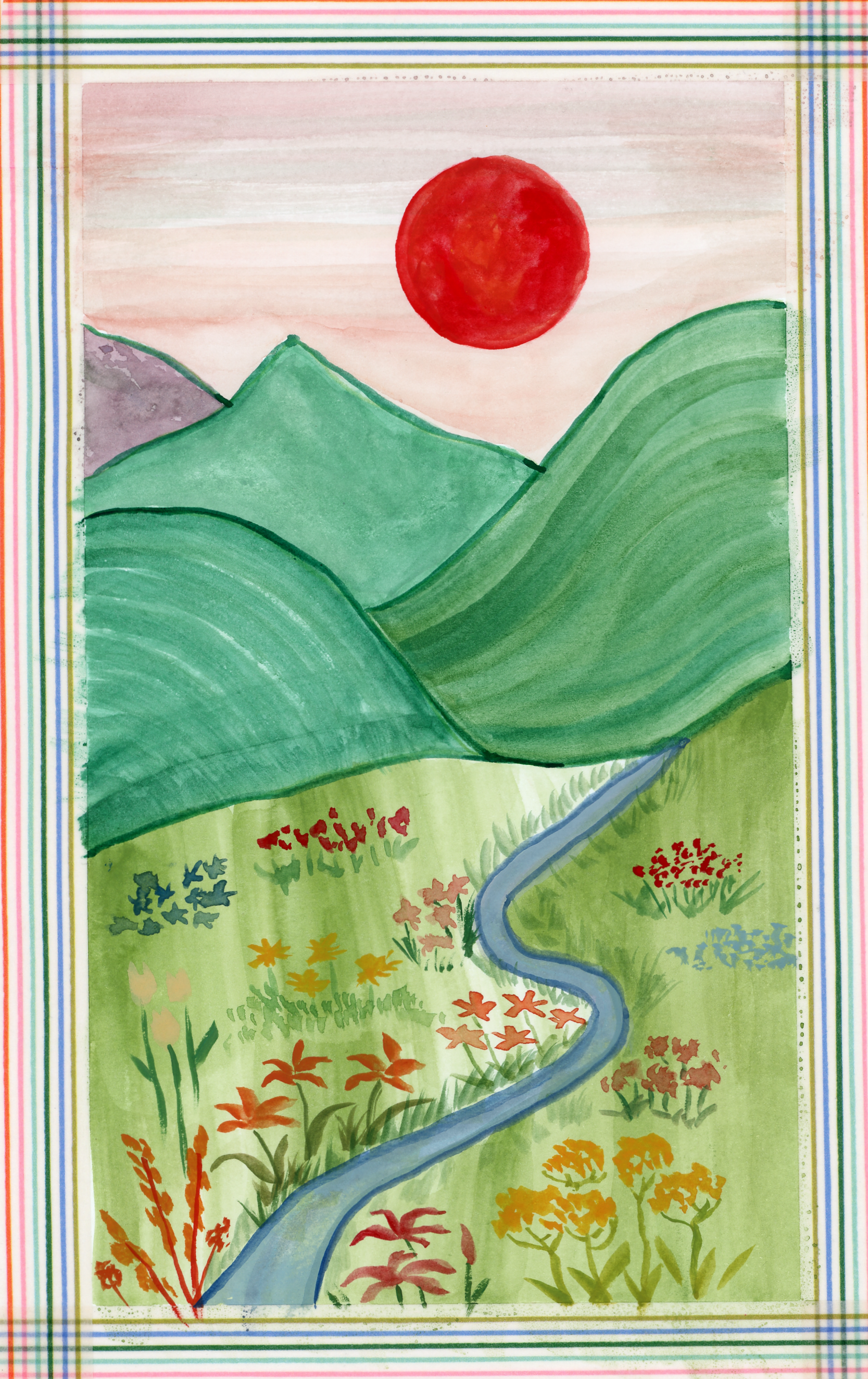
- When you're happy with the clumps of flowers in the meadow, you can clean up the outlines of your landscape to create some dimension and prepare to start adding your textures.
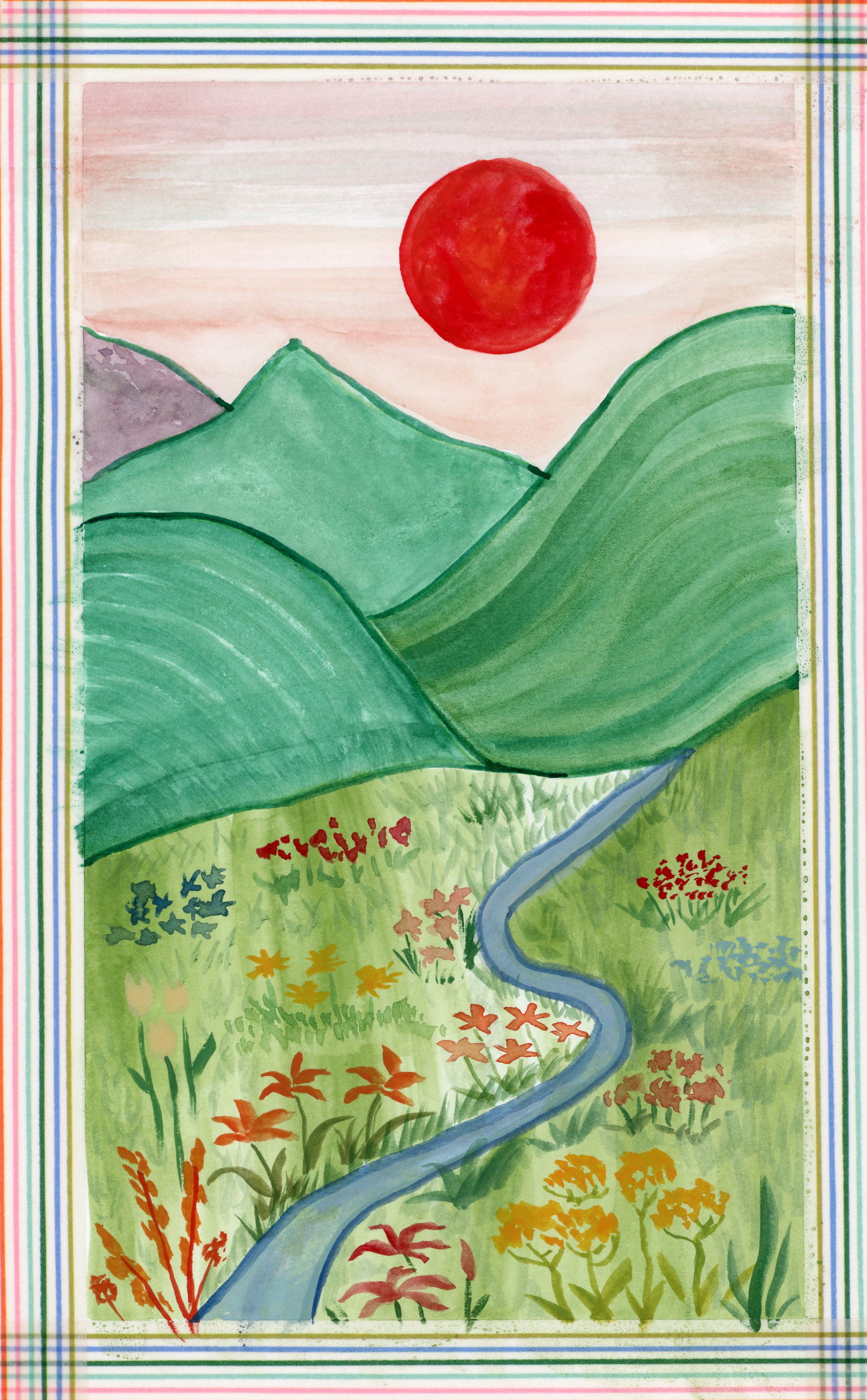
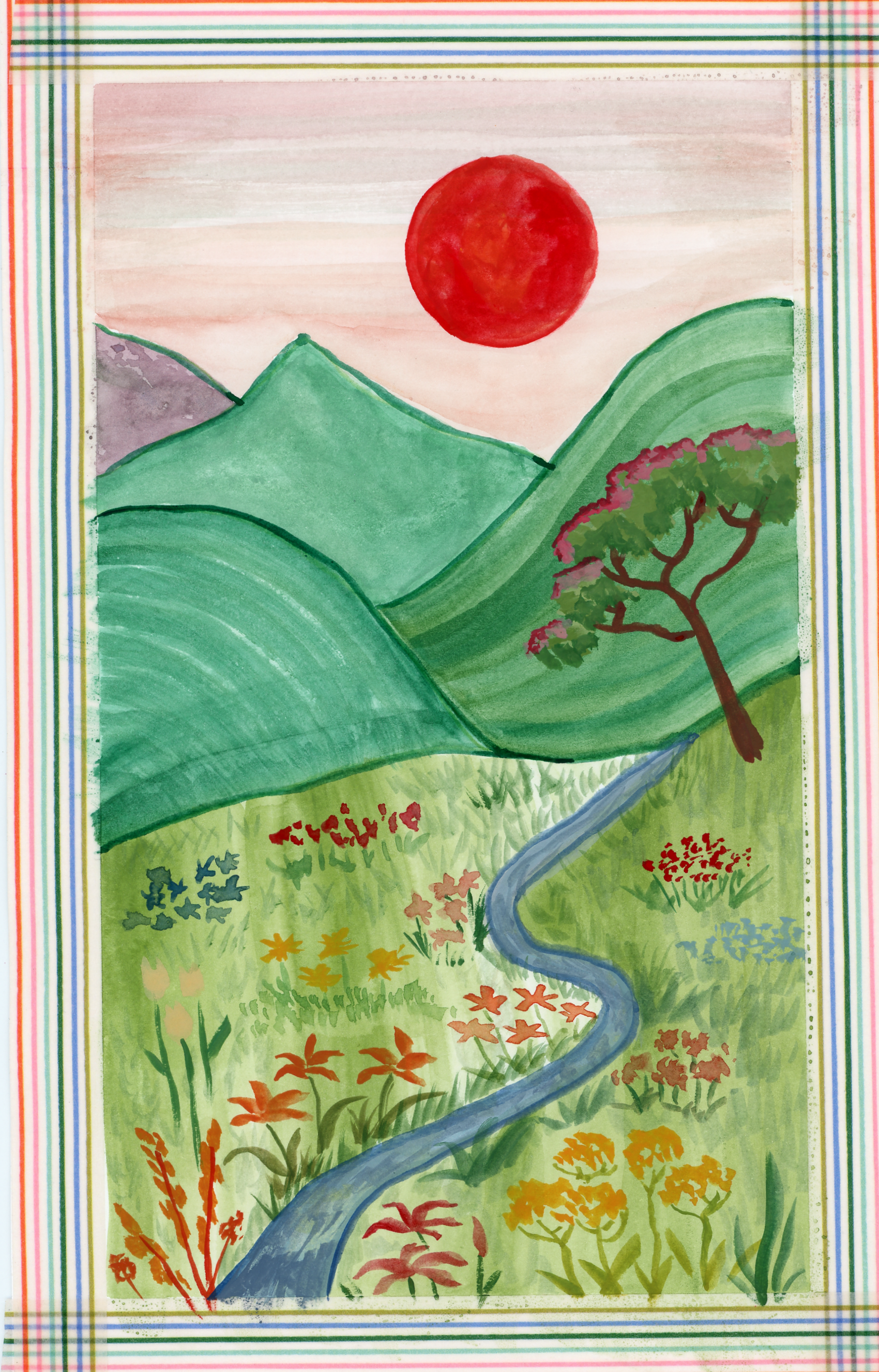
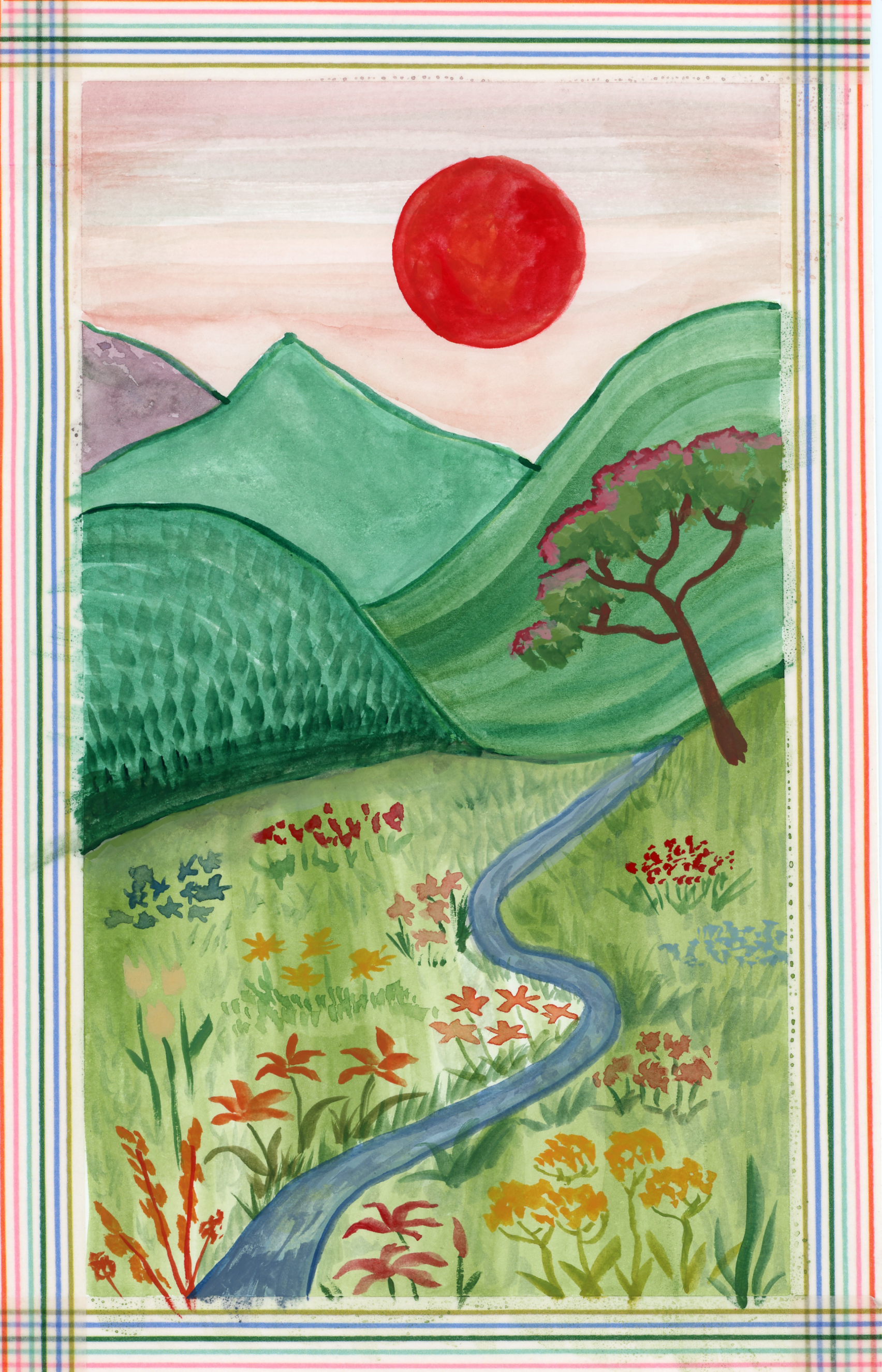
- Add some more grass texture to fill in the spaces between your flowers. If you would like, add in a tree to the top of your hill, using the same technique as painting yarrow. Take a dark shade of green, and tap your brush against the first hill to create a pattern, letting the paint run out the closer you get to the top to create a gradient.
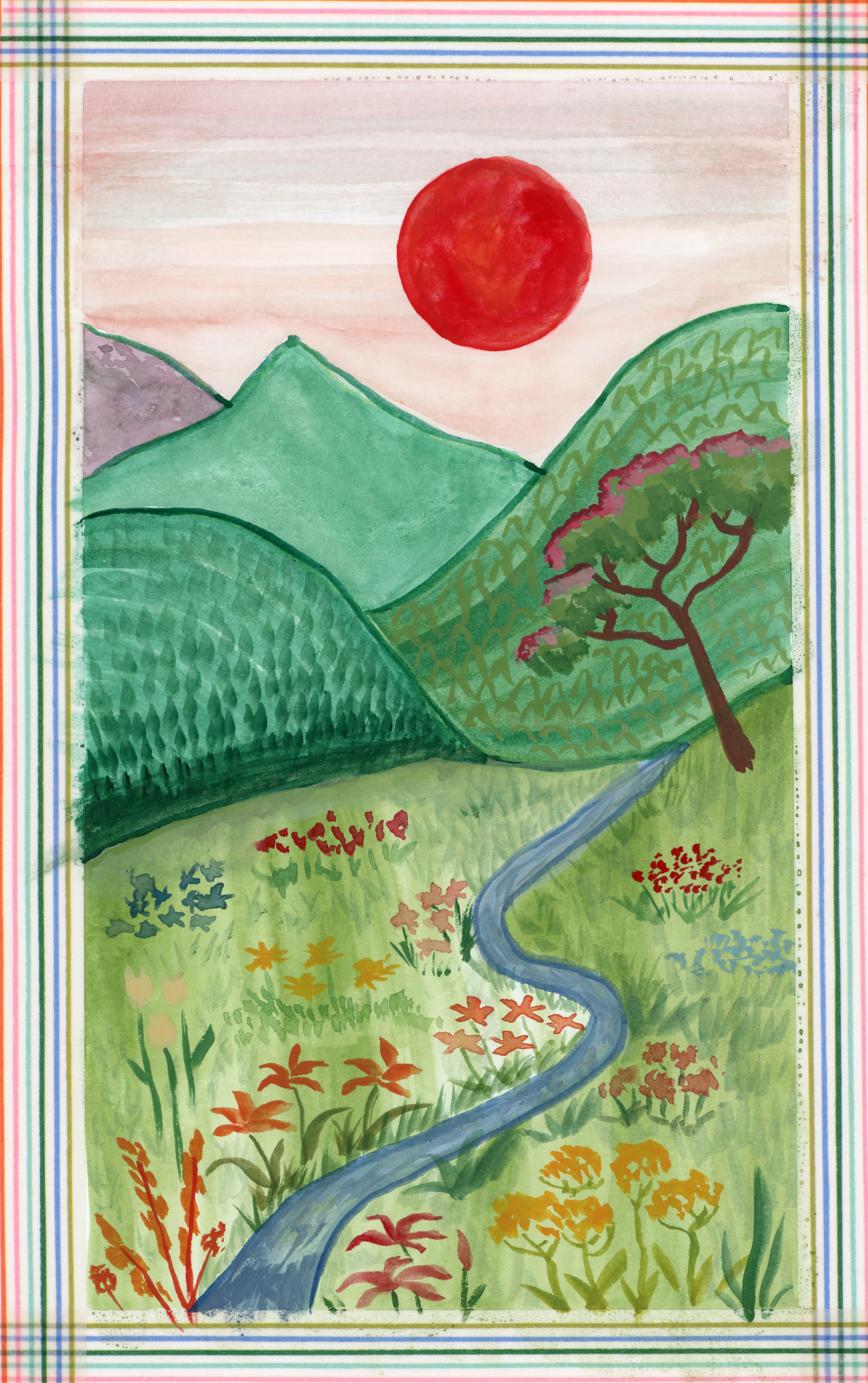
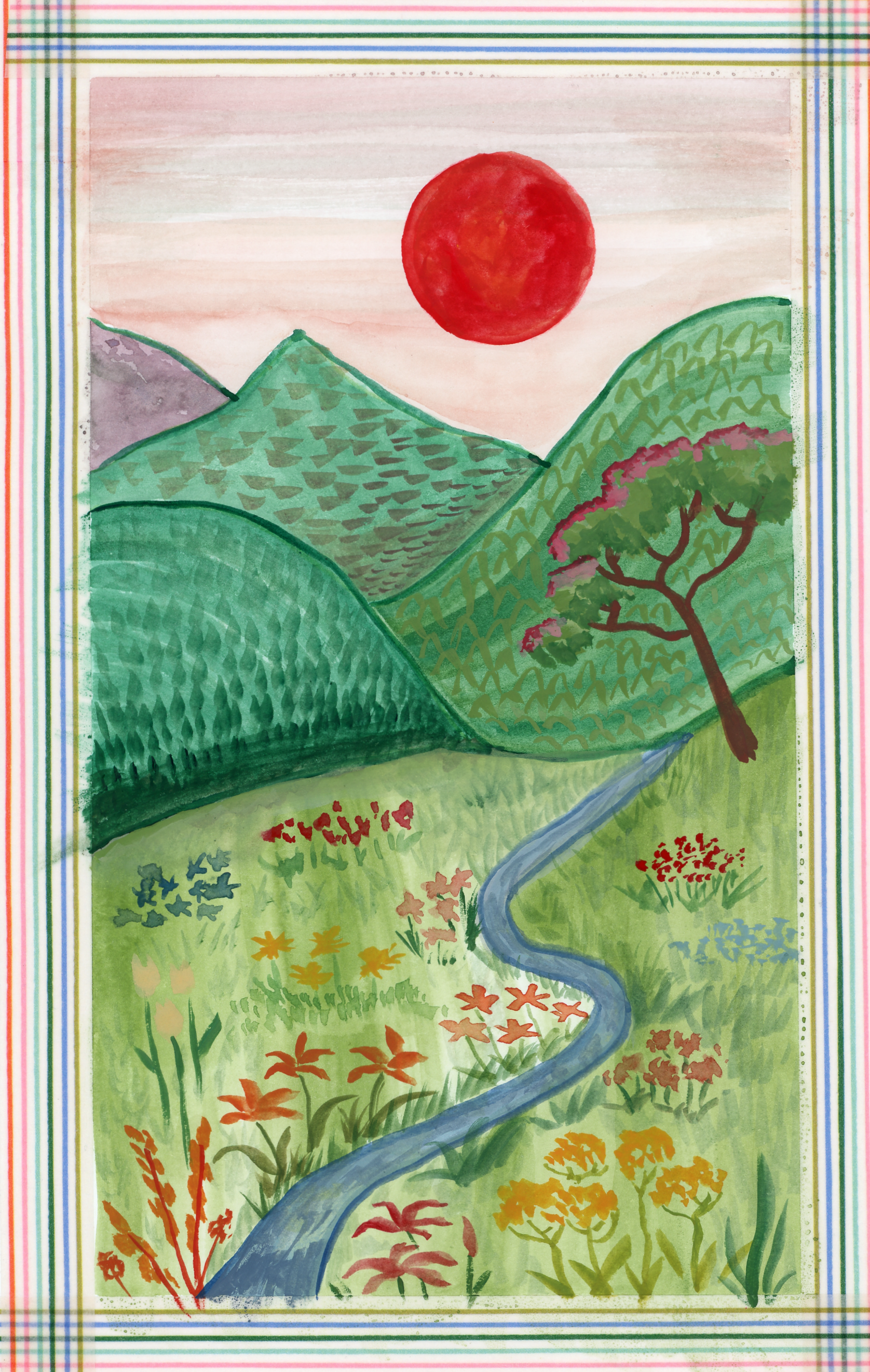
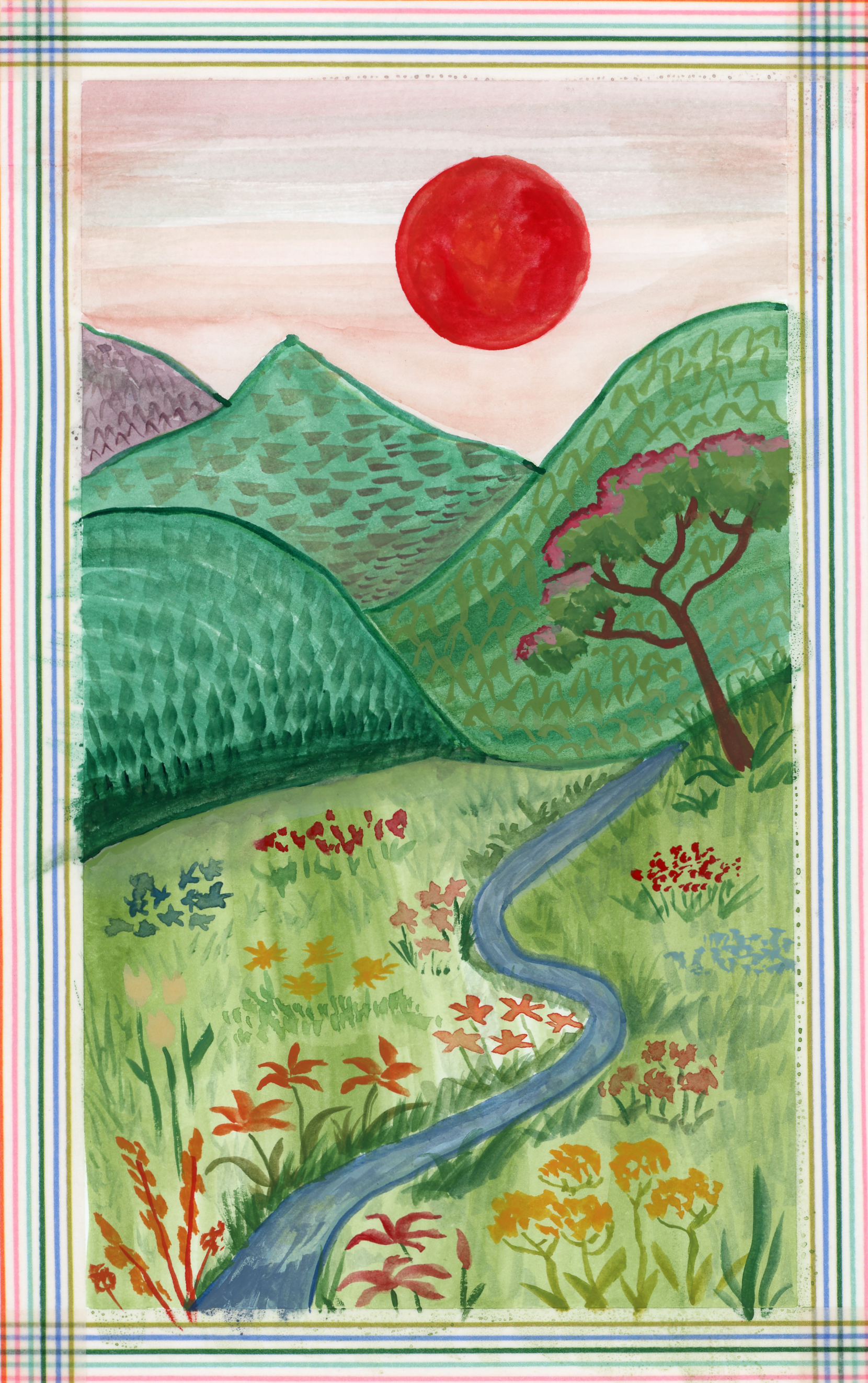
- Now with a different shade of green and different a pattern (perhaps something like scales) fill in some texture to the next hill. For the foreground mountain, choose a purple shade to add texture. Darken the shade for the last mountain with a texture of your choosing.
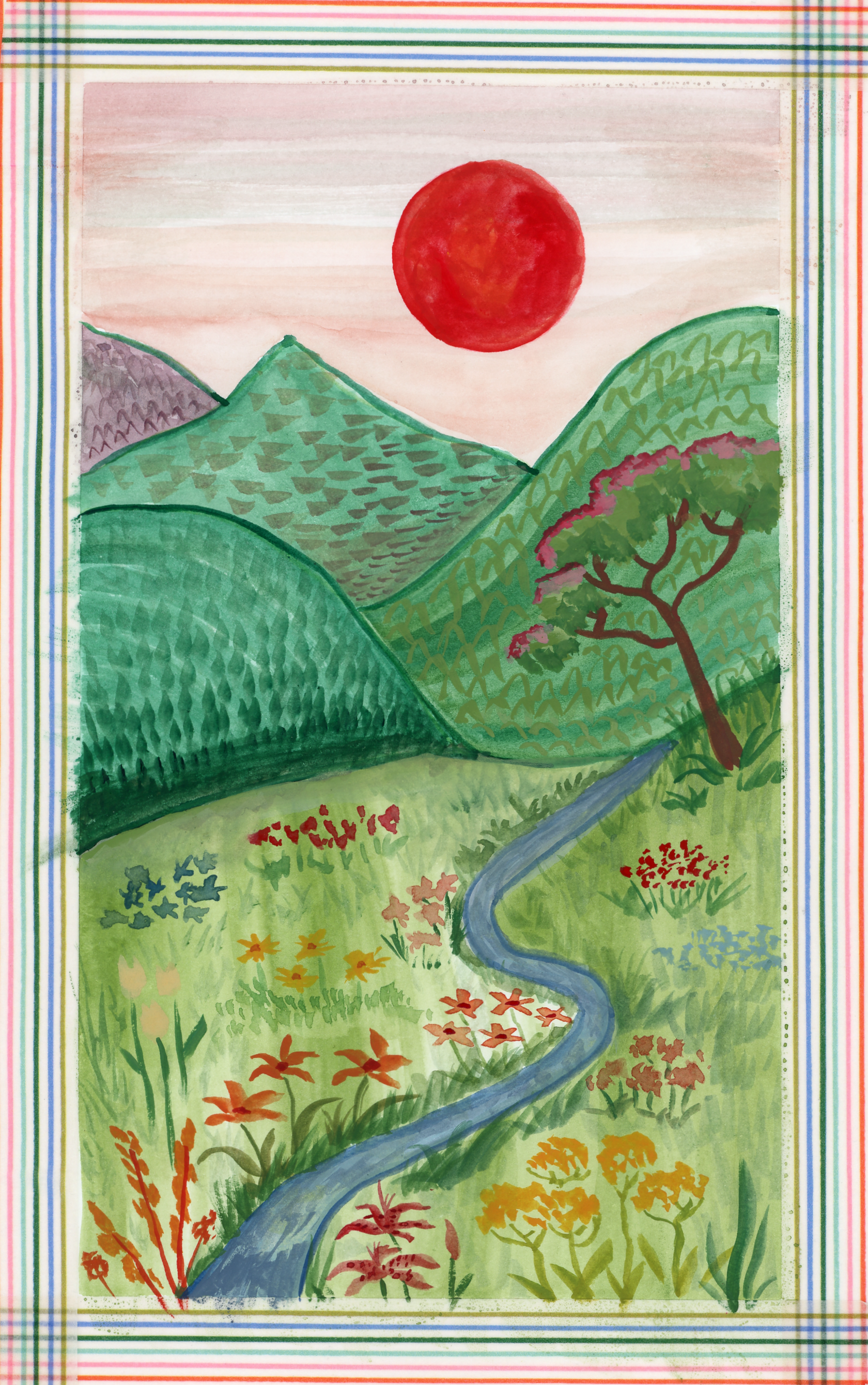
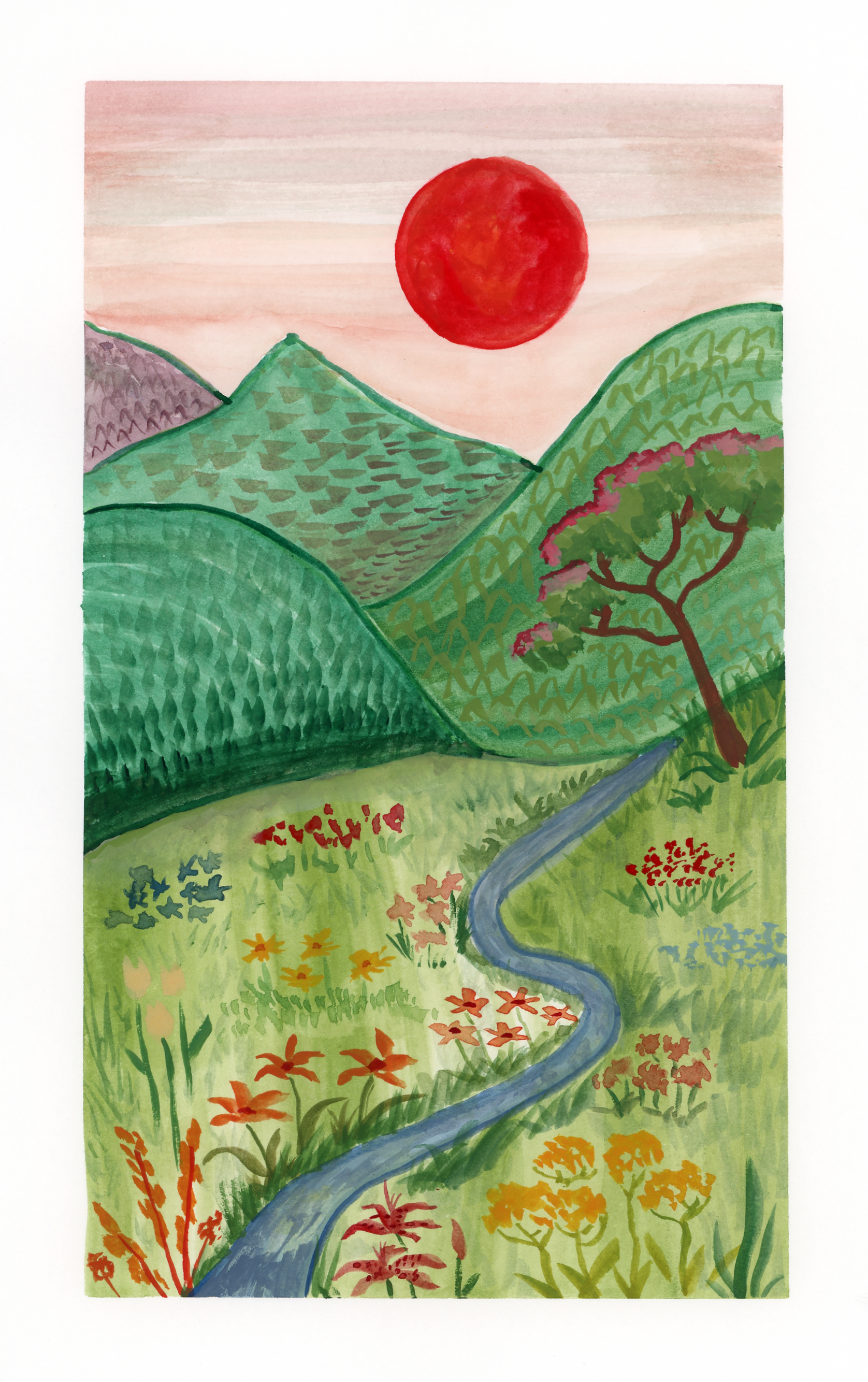
- When you're satisfied with the textures you've added, tear off the washi tape carefully to reveal your final painting, and enjoy the creative fruits of your labor.